

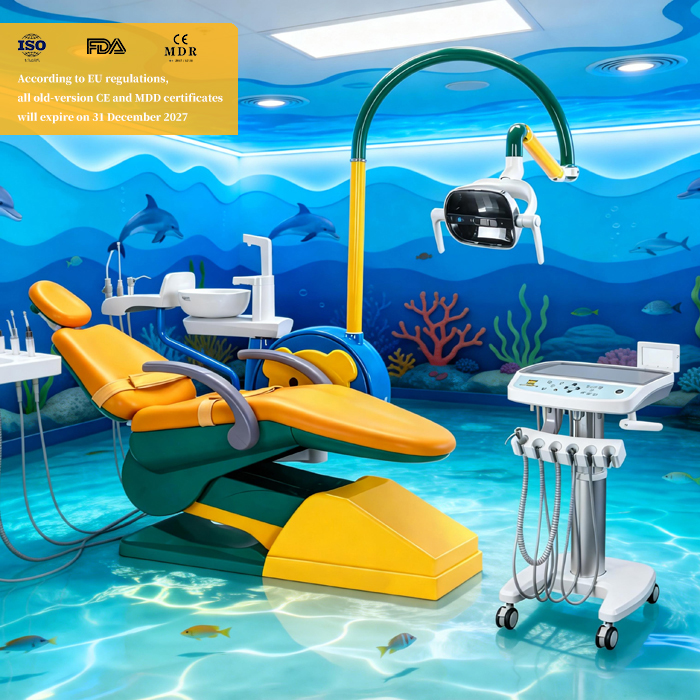
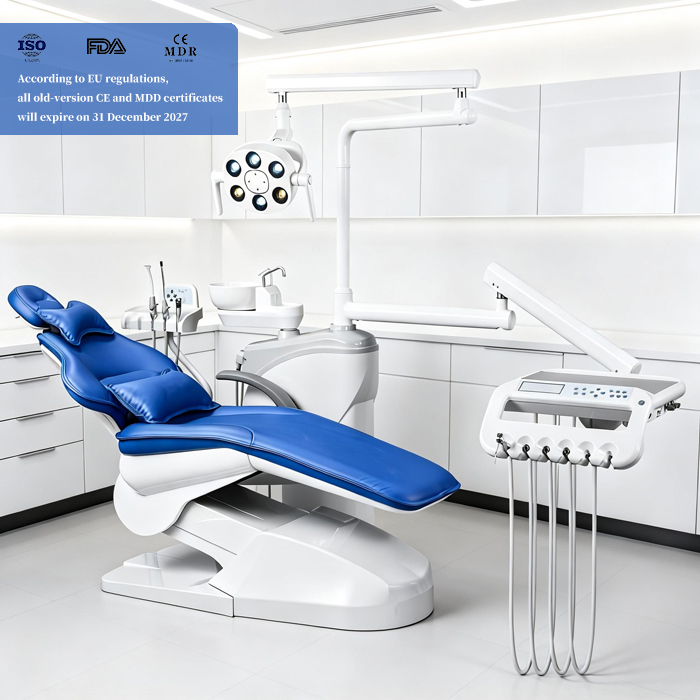
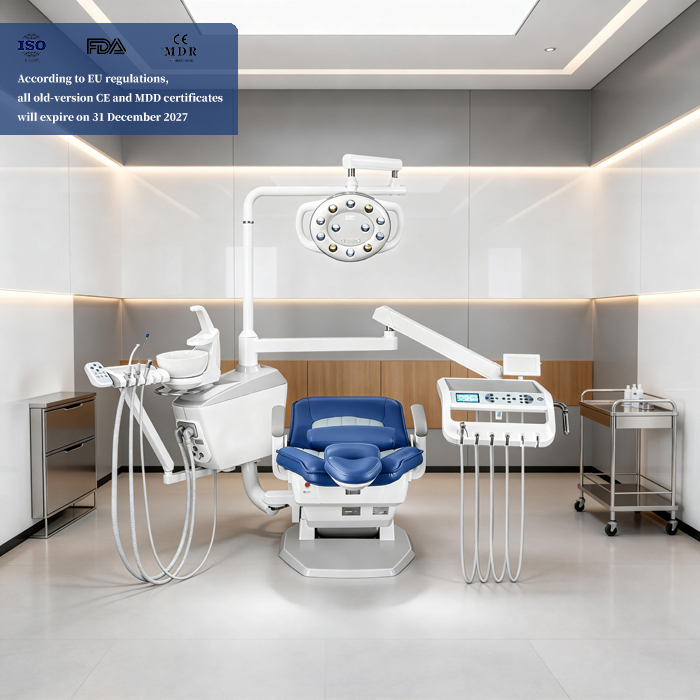
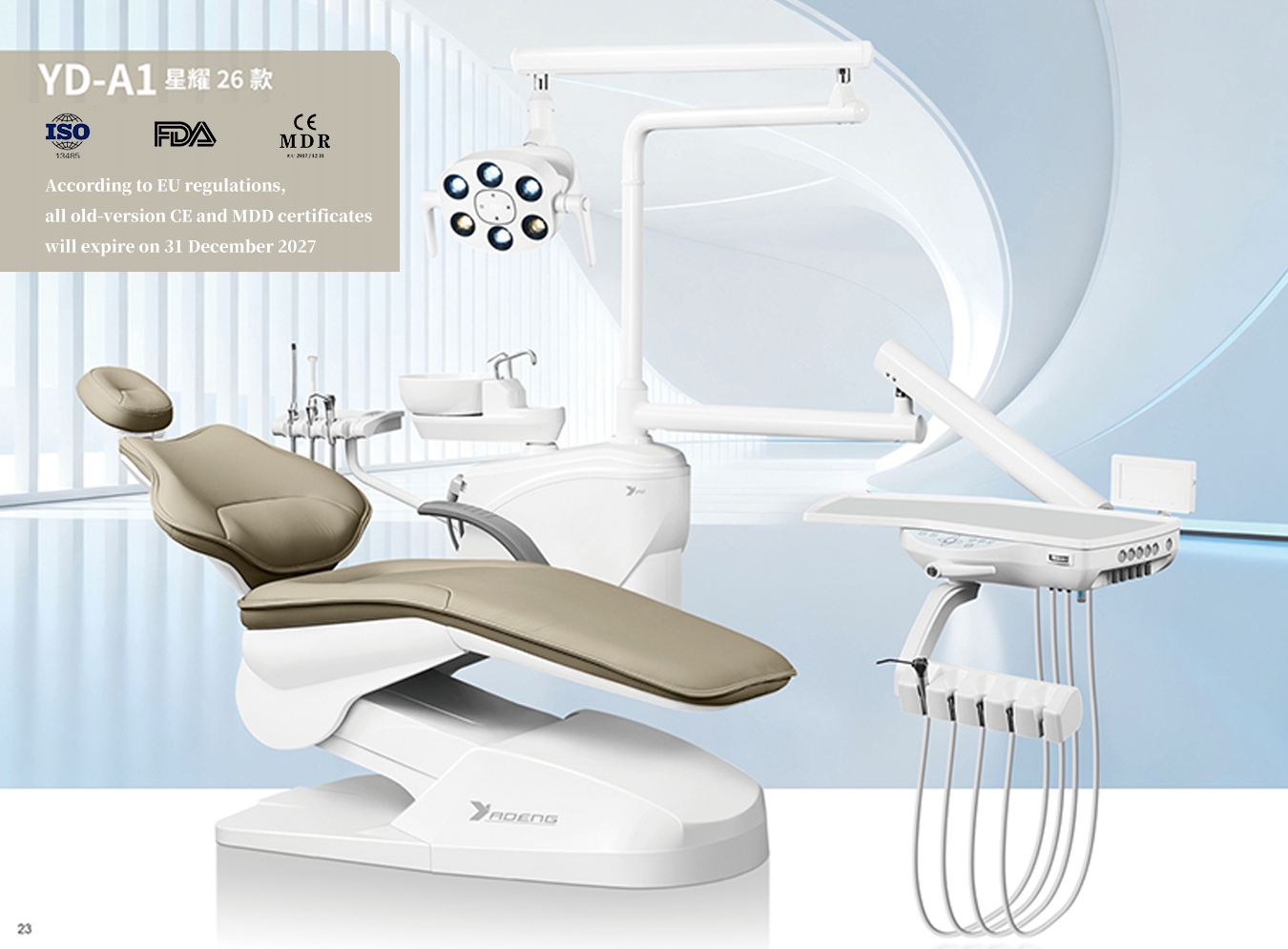
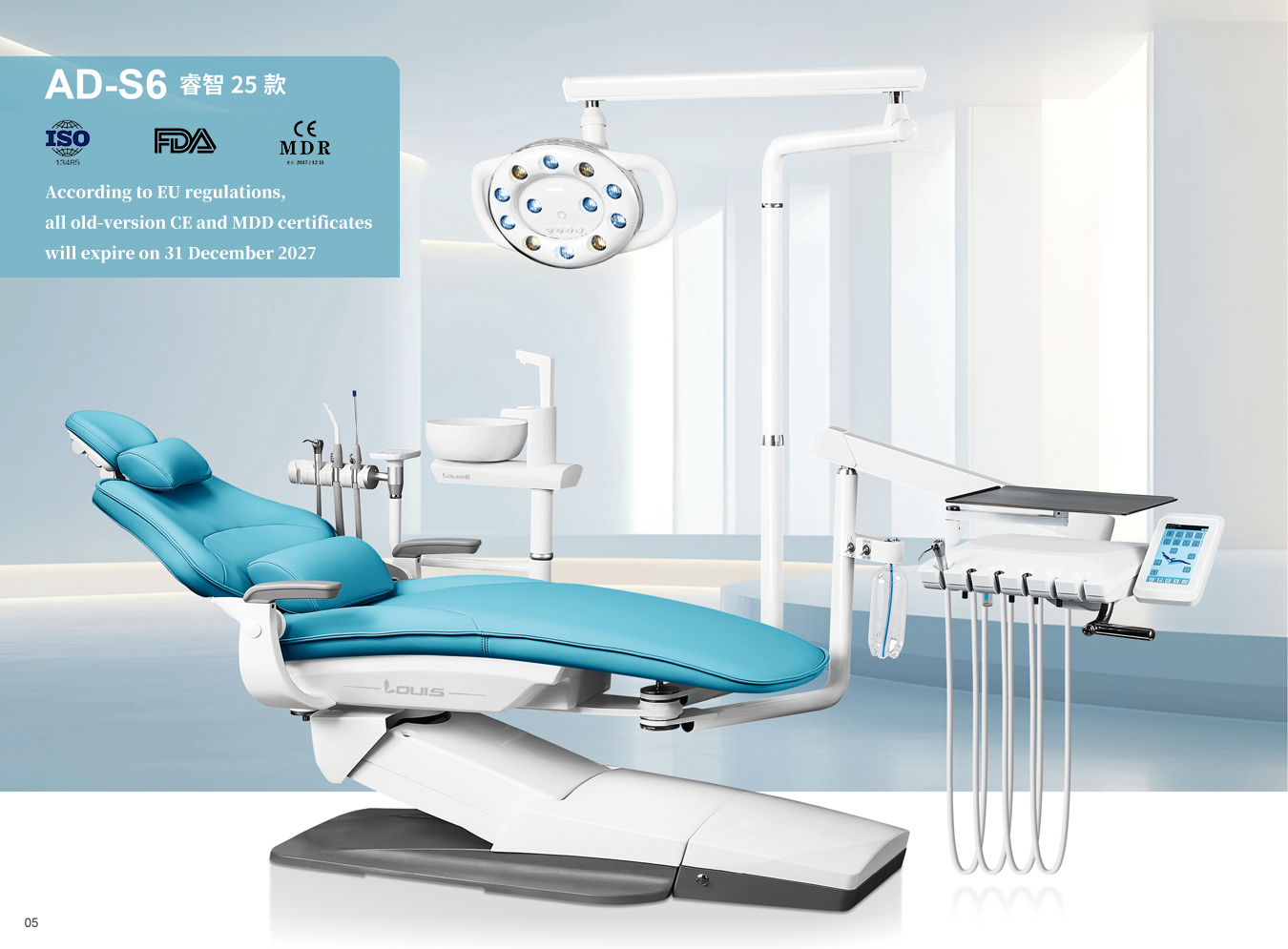
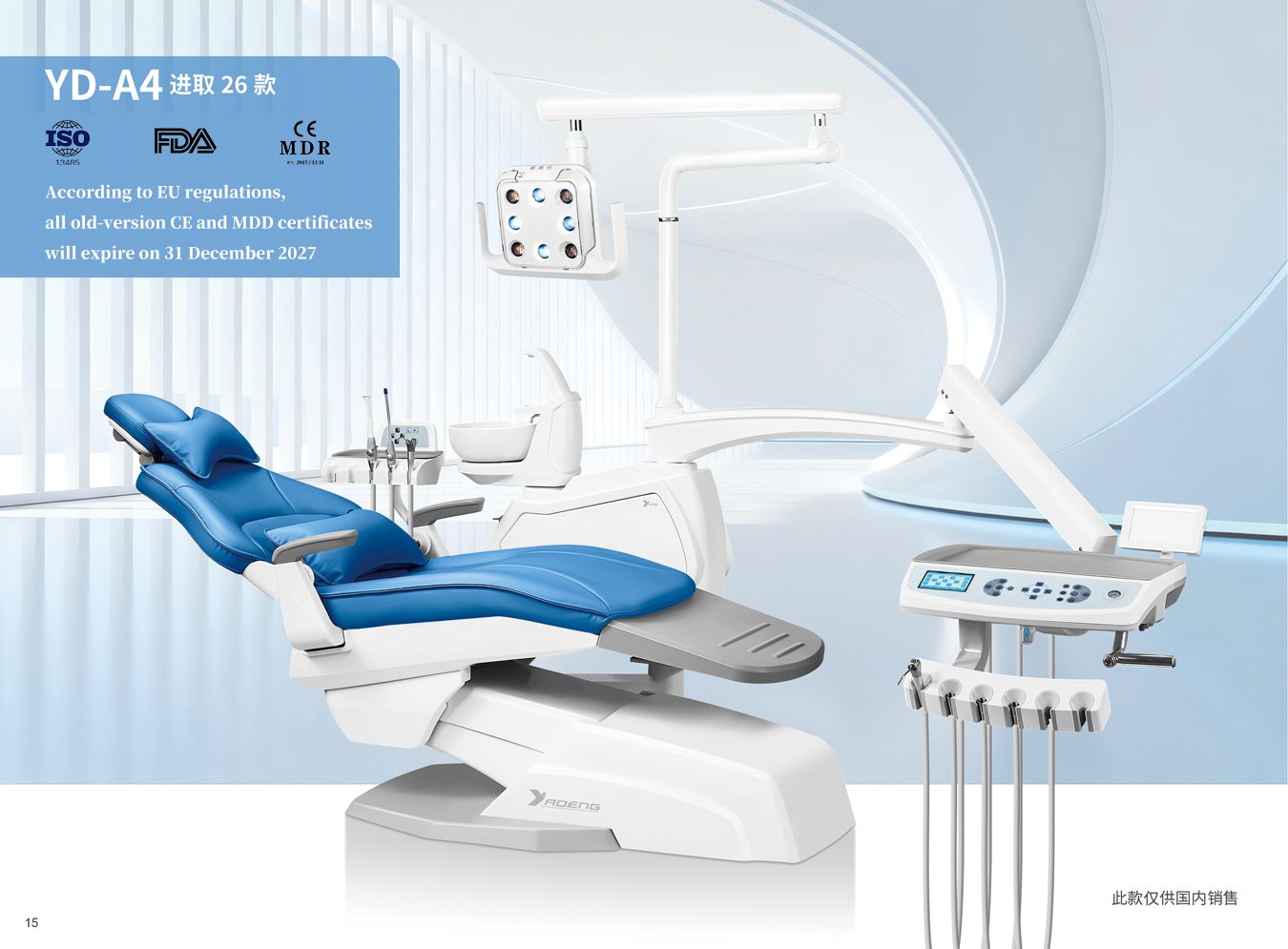
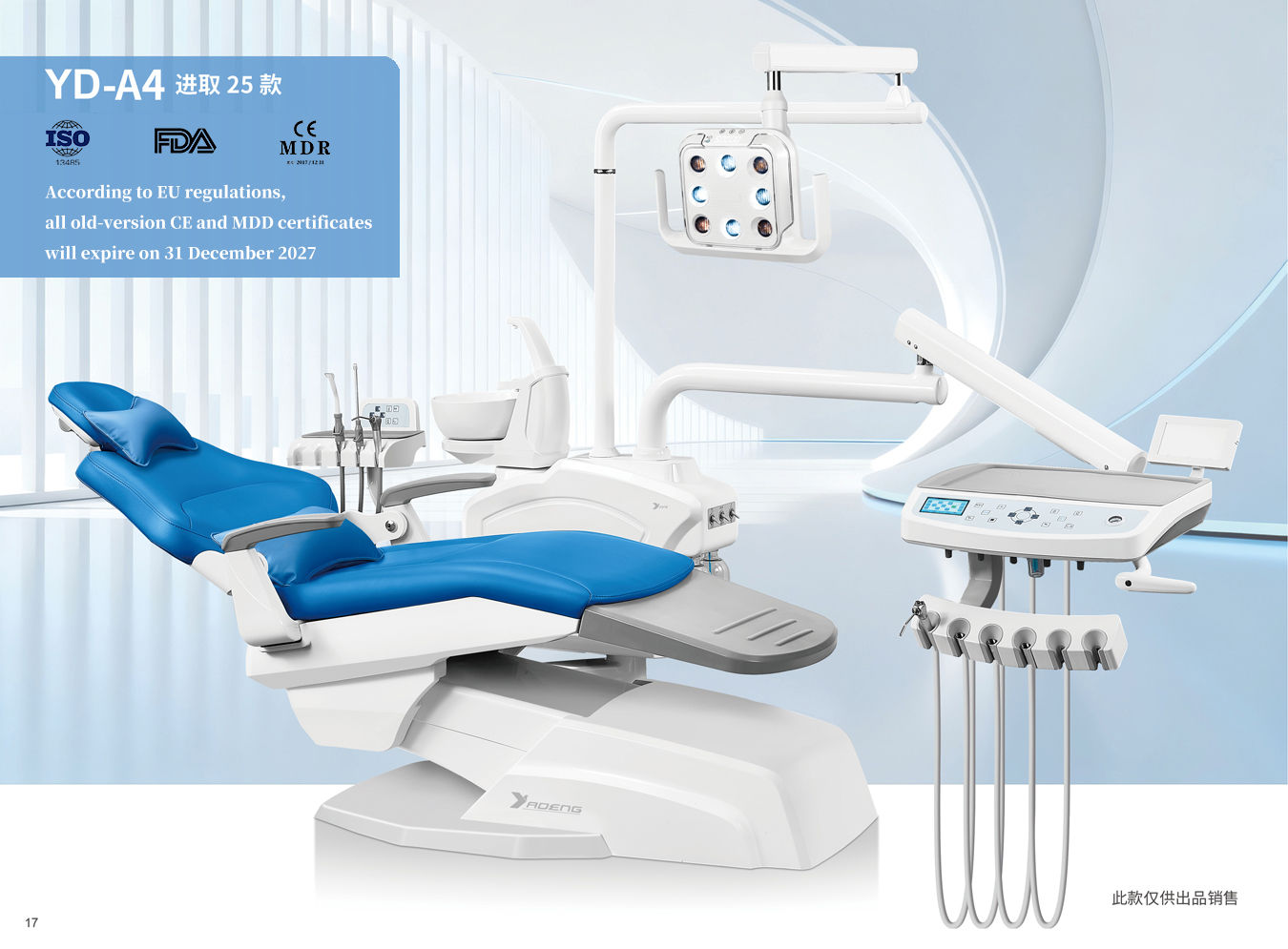
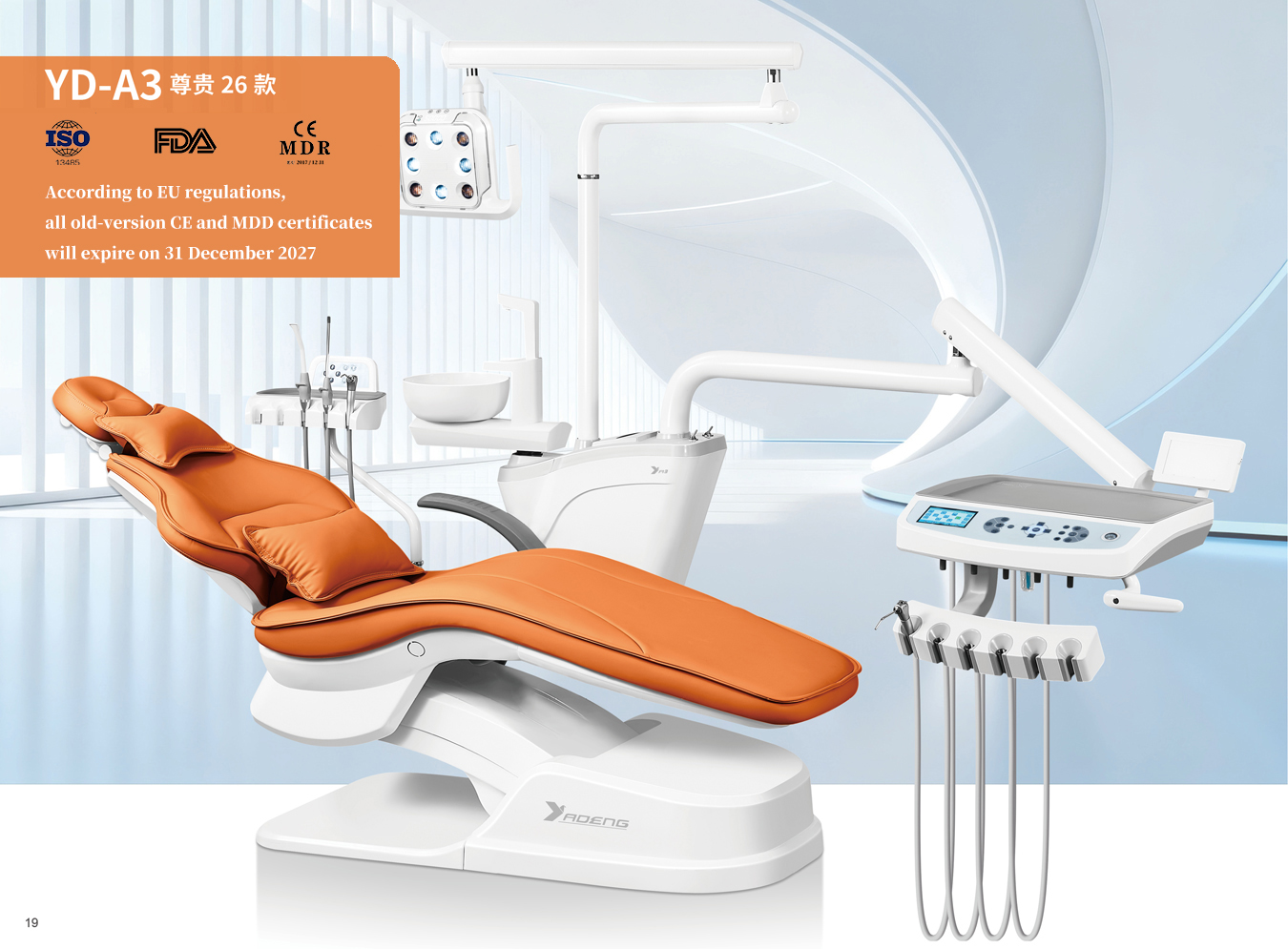
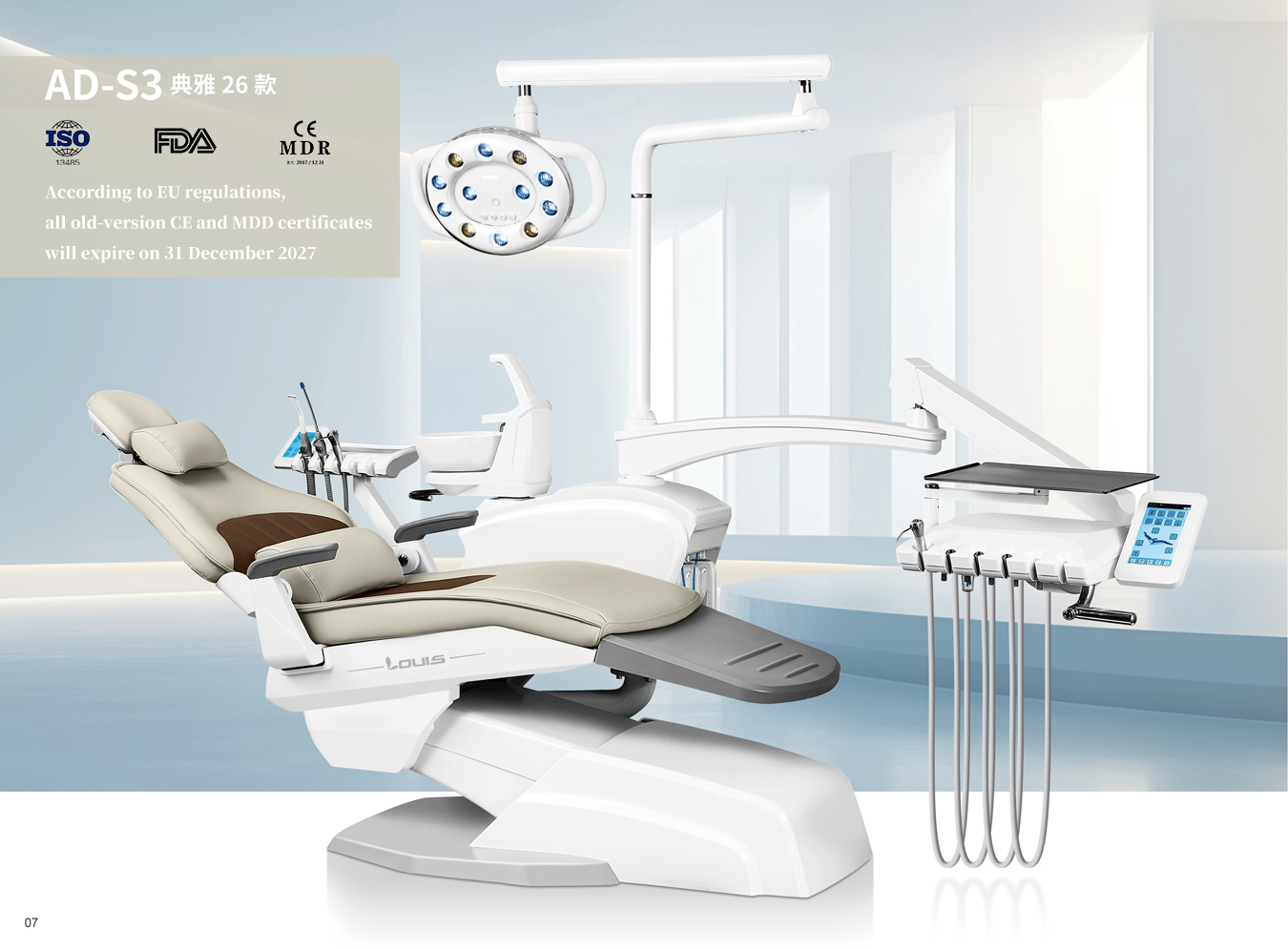
In dental clinic equipment, the dental chair is one of the most basic and core components. Whether for comprehensive treatment, routine checkups, or complex oral procedures, the dental chair plays a crucial role in patient support, posture adjustment, and treatment coordination.
During the selection or research process, many people encounter a common question: What are the differences between hydraulic and electric dental chairs?
From an appearance perspective, both types of dental chairs have basic functions such as height adjustment and reclining. However, they differ significantly in their drive mechanisms, structural principles, user experience, and maintenance logic.
This article will systematically analyze the core differences between hydraulic and electric dental chairs from multiple dimensions, including working principles, structural features, operation methods, stability, and maintenance costs, helping you gain a clear and professional understanding.
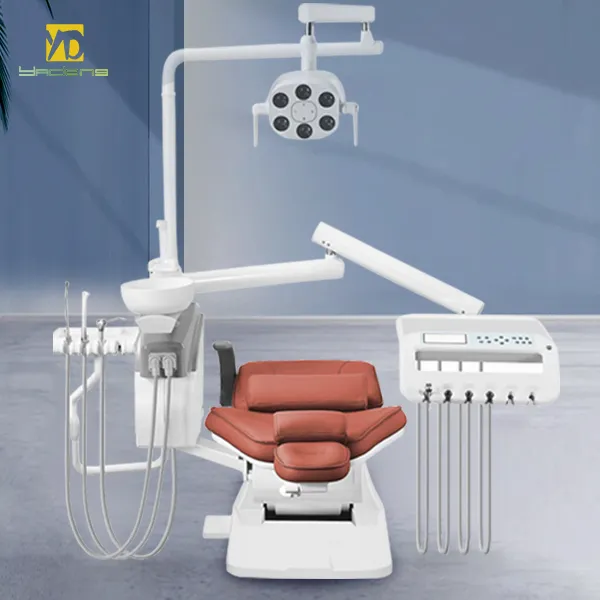
What is a hydraulic dental chair?
A hydraulic dental chair is a dental chair that uses a hydraulic system to achieve chair height adjustment and posture control. Its core power source is not an electric motor, but rather relies on pressure changes between a hydraulic pump, hydraulic oil, and hydraulic cylinders to complete the movement.
Common components of a hydraulic dental chair include:
• Hydraulic pump assembly
• Hydraulic oil storage system
• Hydraulic cylinder and transmission structure
• Mechanical or semi-automatic control device
Hydraulic dental chairs were one of the earliest types of dental chairs used in dental practice, commonly found in early clinics and some basic setups.
What is an electric dental chair?
Electric dental chairs are currently the more widely used type of dental chair. They use a motor-driven system, along with a control panel and electronic logic, to achieve chair height adjustment, backrest adjustment, and multi-angle positioning.
Electric dental chairs typically include the following core components:
• Motor and reduction gear mechanism
• Control panel and wiring system
• Height and backrest transmission assembly
• Control panel or foot control system
Compared to hydraulic dental chairs, electric dental chairs are more mature in terms of control precision, operation methods, and system integration, and are therefore more common in modern dental clinics.
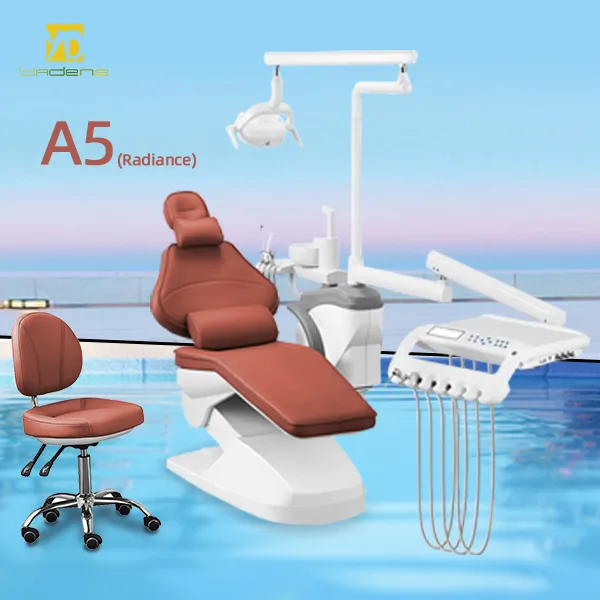
What are the differences in the working principles of hydraulic and electric dental chairs?
Hydraulic dental chairs rely on hydraulic oil to generate pressure in a closed system. Pressure changes drive hydraulic cylinders, causing the chair to rise, fall, or tilt. Their characteristic is a more mechanical structure with less reliance on electrical control.
Electric dental chairs, on the other hand, use a motor to convert electrical energy into mechanical energy, which is then transmitted through a transmission mechanism to achieve various movements. Their operation is highly dependent on the stability of the electrical control system and circuitry.
From a working principle perspective, hydraulic dental chairs lean towards traditional mechanical systems, while electric dental chairs are driven by motors – this is the most fundamental difference between the two.
What are the differences in user experience between the two types of dental chairs?
In daily use, user experience is a crucial aspect distinguishing hydraulic and electric dental chairs.
Hydraulic dental chairs typically move relatively slowly, with adjustments being more linear. Some models require mechanical control devices for operation. These chairs emphasize stability but have relatively limited flexibility.
In contrast, electric dental chairs usually feature more intuitive controls, such as buttons or foot pedals. Doctors or assistants can adjust the height and angle of the chair more quickly, resulting in a smoother overall operation.
From an operational perspective, electric dental chairs are more in line with the pace of modern dental treatment, while hydraulic dental chairs are more suited to basic usage needs.
In terms of adjustment precision, which type of dental chair has the advantage?
Adjustment precision directly affects the comfort and ease of operation during dental treatment.
The adjustment precision of hydraulic dental chairs is limited by the hydraulic system itself. The adjustment process is usually based on continuous changes, with relatively limited fine-tuning capabilities. In some cases, multiple fine adjustments may be needed to achieve the ideal position.
Electric dental chairs, on the other hand, use motors and electronic control systems, allowing for more precise height and angle control. The chair is more controllable during positioning, and the consistency of repeated positioning is higher.
Therefore, in terms of adjustment precision, electric dental chairs are generally superior to hydraulic dental chairs.
Is there a difference in stability between hydraulic and electric dental chairs?
Stability is a very important performance indicator for dental chairs.
Hydraulic dental chairs rely on a hydraulic system to bear weight. Their advantages lie in their simple structure, strong load-bearing capacity, and good overall stability under normal conditions. However, hydraulic systems have high requirements for sealing; once a leak occurs, stability will be affected.
Electric dental chairs maintain positional stability through mechanical transmission and motor locking. As long as the structural design is reasonable and the electrical control system is reliable, their stability can also meet long-term usage requirements.
Overall, both types of dental chairs can achieve good stability under reasonable design conditions, but the methods of achieving this differ.
What are the differences in maintenance and upkeep between the two types of dental chairs?
The difference in maintenance methods is a crucial point that many people easily overlook.
During long-term use, hydraulic dental chairs require close monitoring of the hydraulic oil condition, seal wear, and for any leaks. If the hydraulic system malfunctions, maintenance often involves professional disassembly.
Maintenance of electric dental chairs focuses on the motor, wiring, and control system. It is necessary to ensure the stable operation of the electrical control system and prevent aging or poor contact in the wiring.
From a maintenance perspective, hydraulic dental chairs lean towards mechanical maintenance, while electric dental chairs lean towards electrical control maintenance; their maintenance logics are different.
What are the differences in environmental adaptability between the two types of dental chairs?
Different usage environments place different requirements on dental chairs.
Hydraulic dental chairs, due to their lower reliance on electrical control, can operate stably even in environments with relatively basic power conditions, which was one of the key reasons for their early widespread use.
Electric dental chairs, on the other hand, have higher requirements for power supply and the stability of their electrical control systems, requiring a relatively stable power environment.
Therefore, in terms of environmental adaptability, hydraulic dental chairs are more adaptable to basic conditions, while electric dental chairs are more suitable for standardized treatment environments.
In terms of structural complexity, which dental chair is simpler?
The structure of a hydraulic dental chair is mainly based on a hydraulic system and mechanical components, making its overall structure relatively intuitive. However, the hydraulic piping and seals require high-precision manufacturing processes.
Electric dental chairs, in addition to their mechanical structure, add a motor, control board, and wiring system, resulting in a more complex overall system.
However, it's important to note that structural complexity does not equate to unreliability; rather, it signifies a greater diversity of functional implementation methods. The difference in structural complexity essentially reflects different technological approaches.
How to understand the "positioning differences" between hydraulic and electric dental chairs?
From an overall positioning perspective, hydraulic dental chairs emphasize basic functionality and structural reliability, while electric dental chairs prioritize operational efficiency and control precision.
This doesn't mean one type of dental chair is "absolutely better," but rather that the differences stem from varying application scenarios and user needs. Understanding this positioning difference helps in a more rational view of the value of both types of dental chairs.
What certifications does your dental equipment company have?
Guangdong Yadeng Medical Apparatus Co., Ltd. is a certified dental equipment manufacturer and supplier with internationally recognized approvals. Our company has obtained CE certification issued by SGS, ISO13485 Quality Management System certification, and a Free Sale Certificate. These certifications confirm that our dental chairs and dental units meet global safety and quality standards. Buyers and distributors who want to purchase from a reliable Chinese dental equipment factory can trust our compliance and production standards.
