

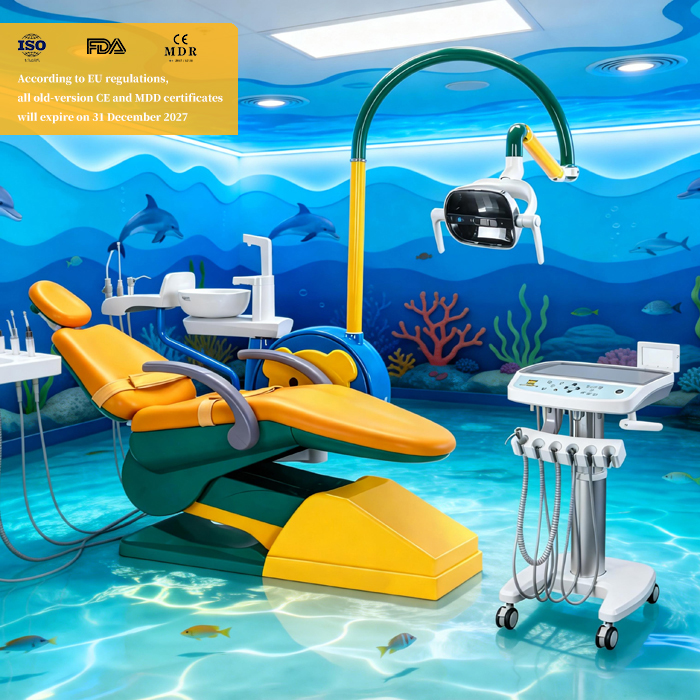
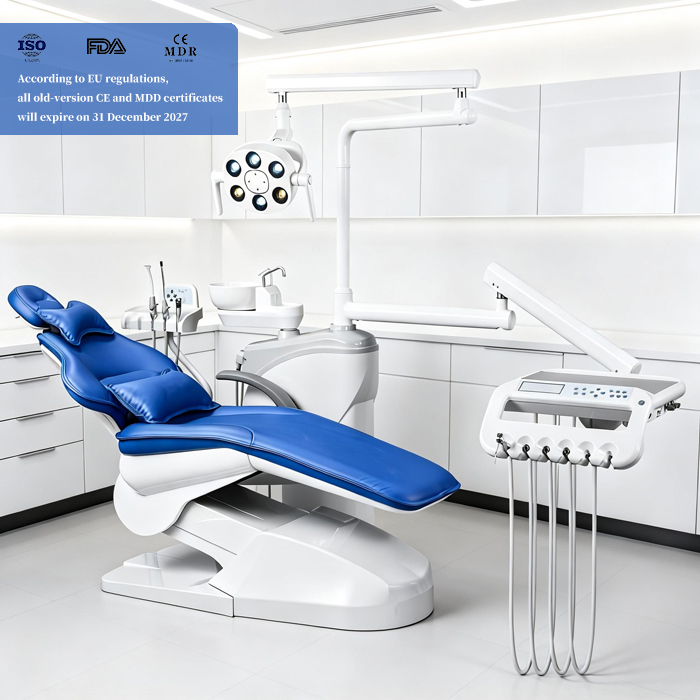
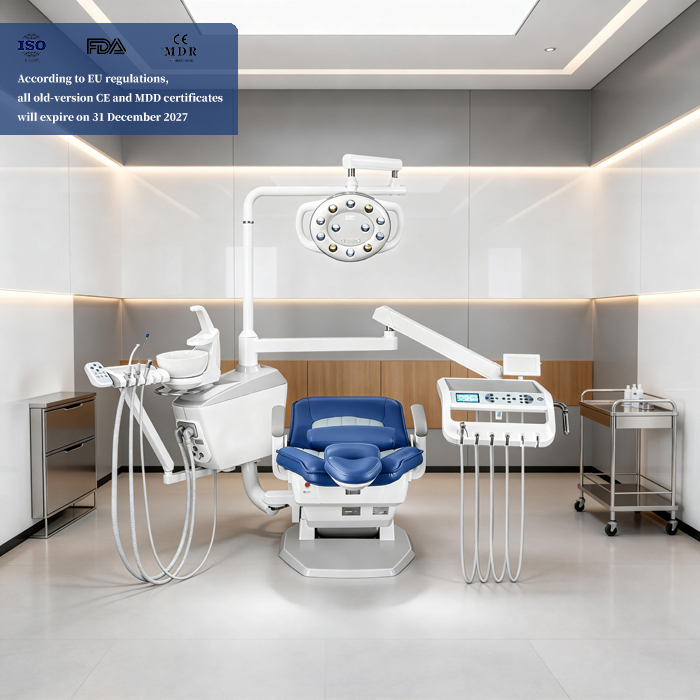
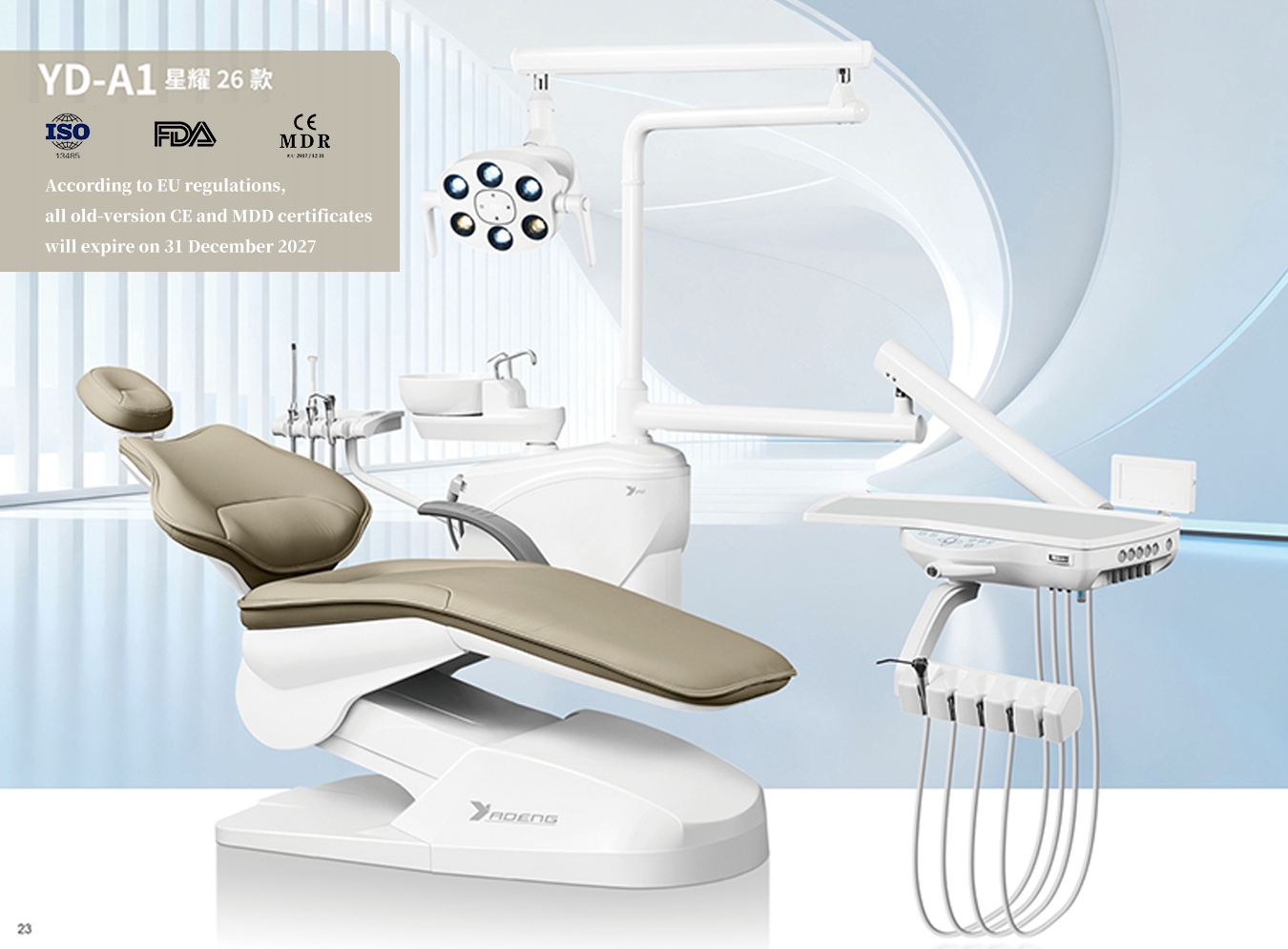
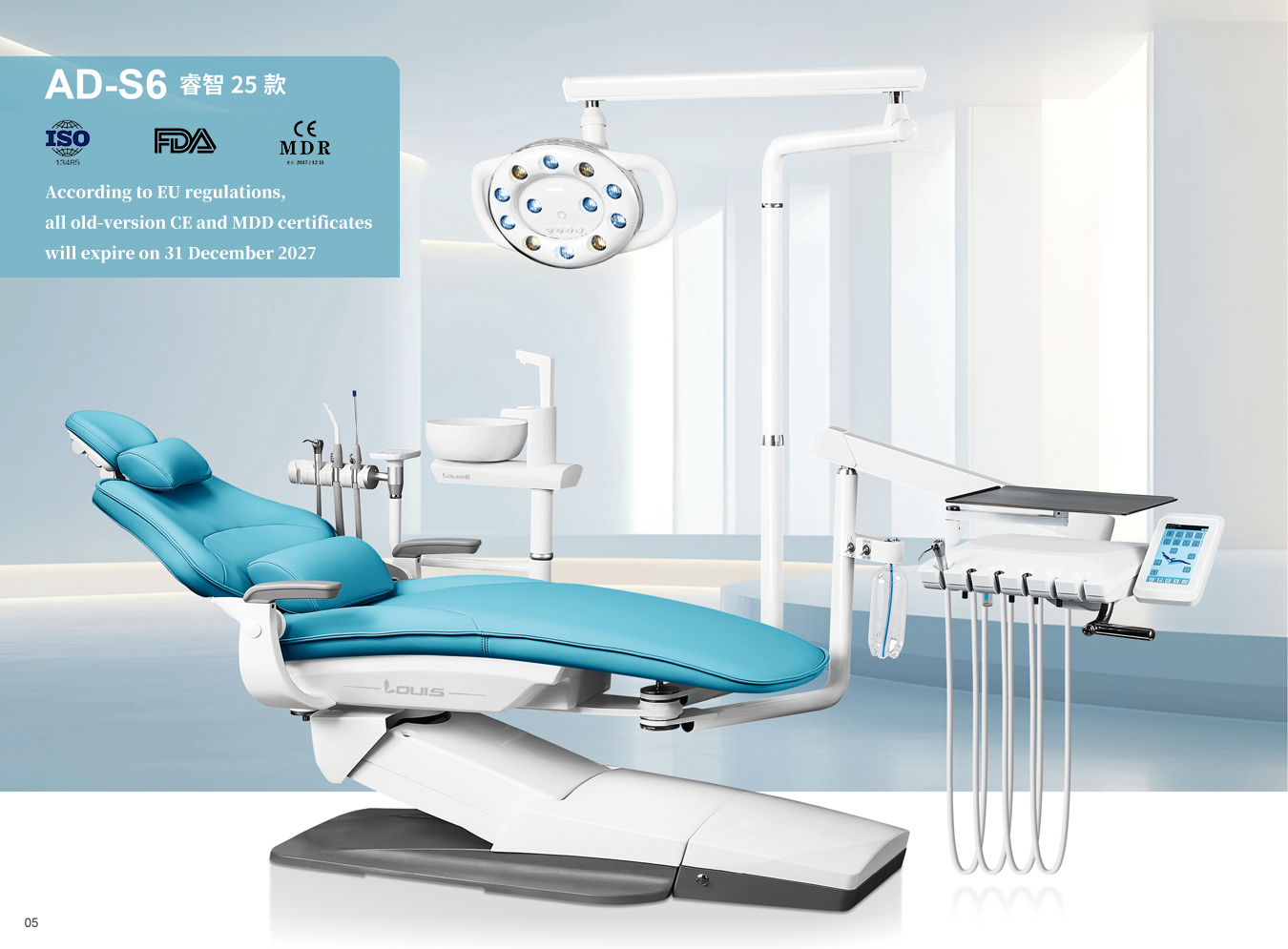
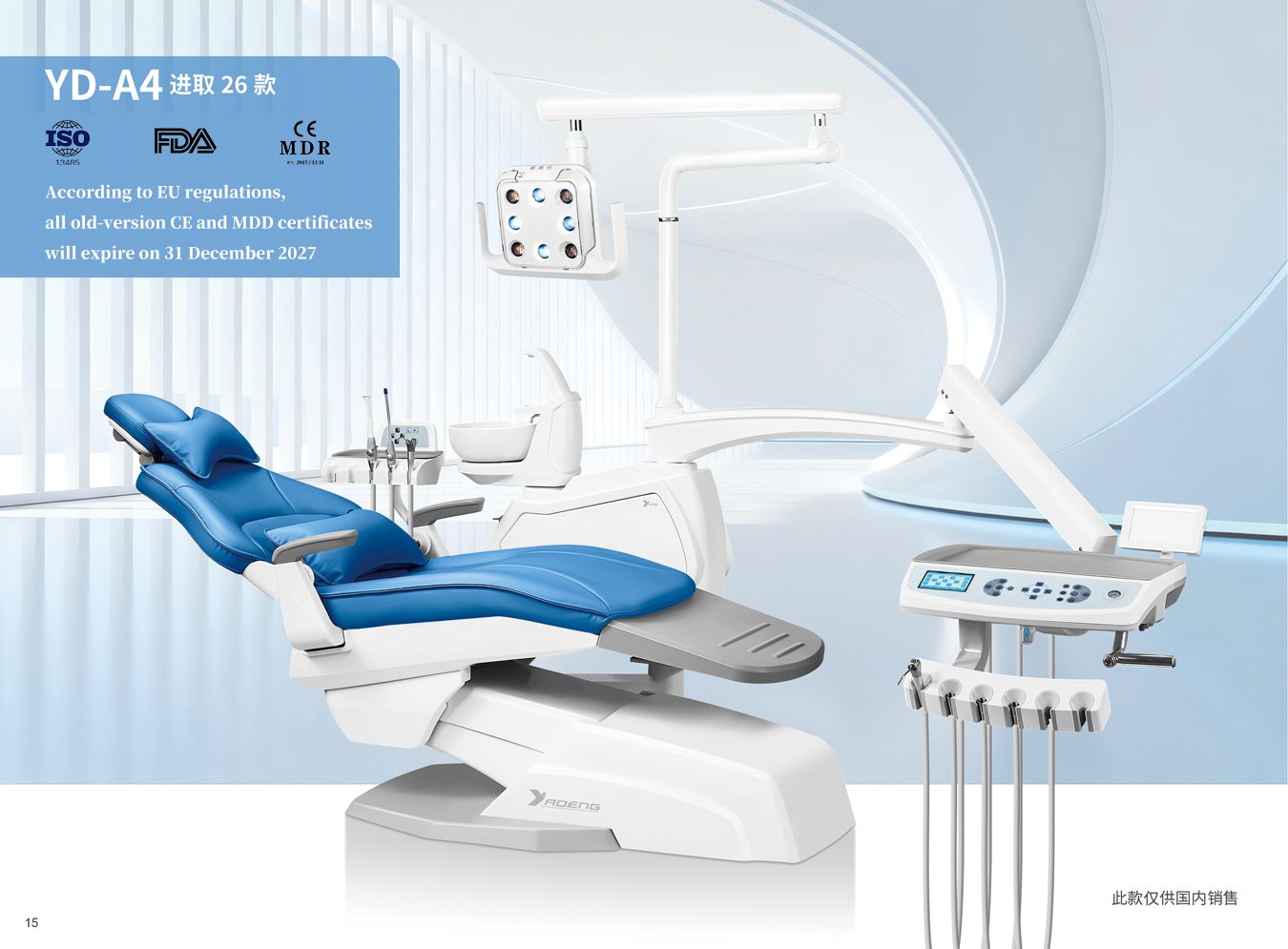
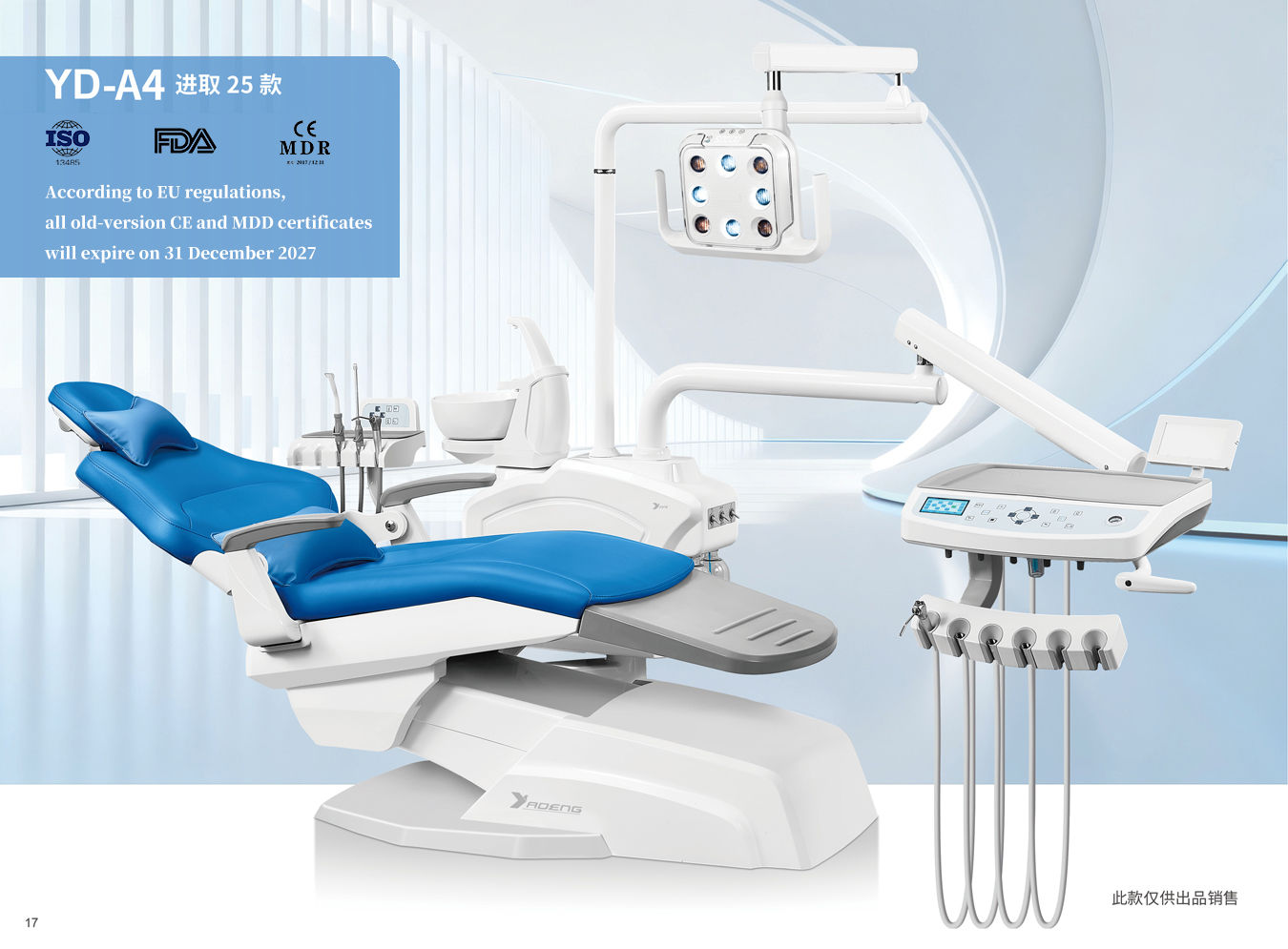
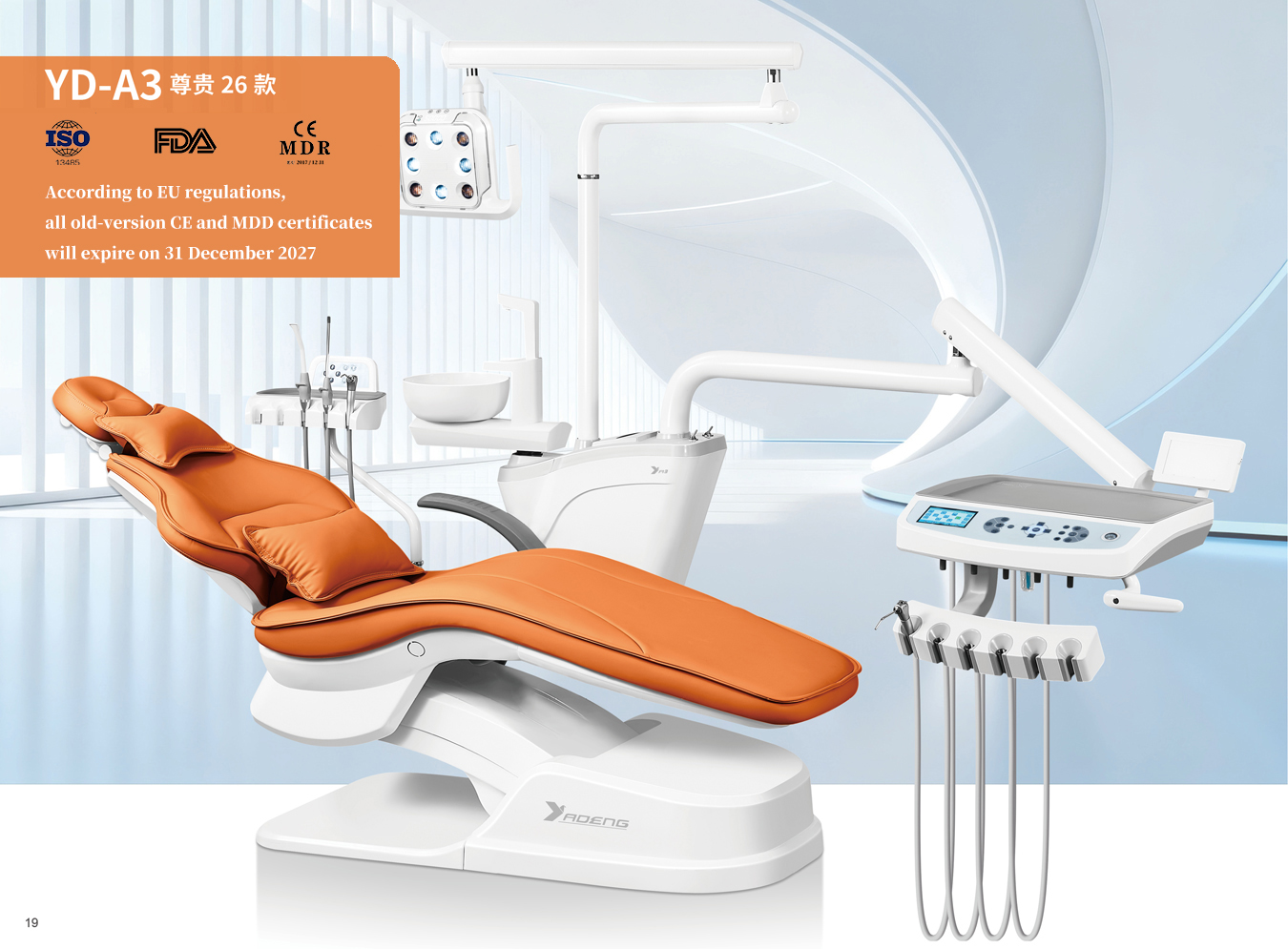
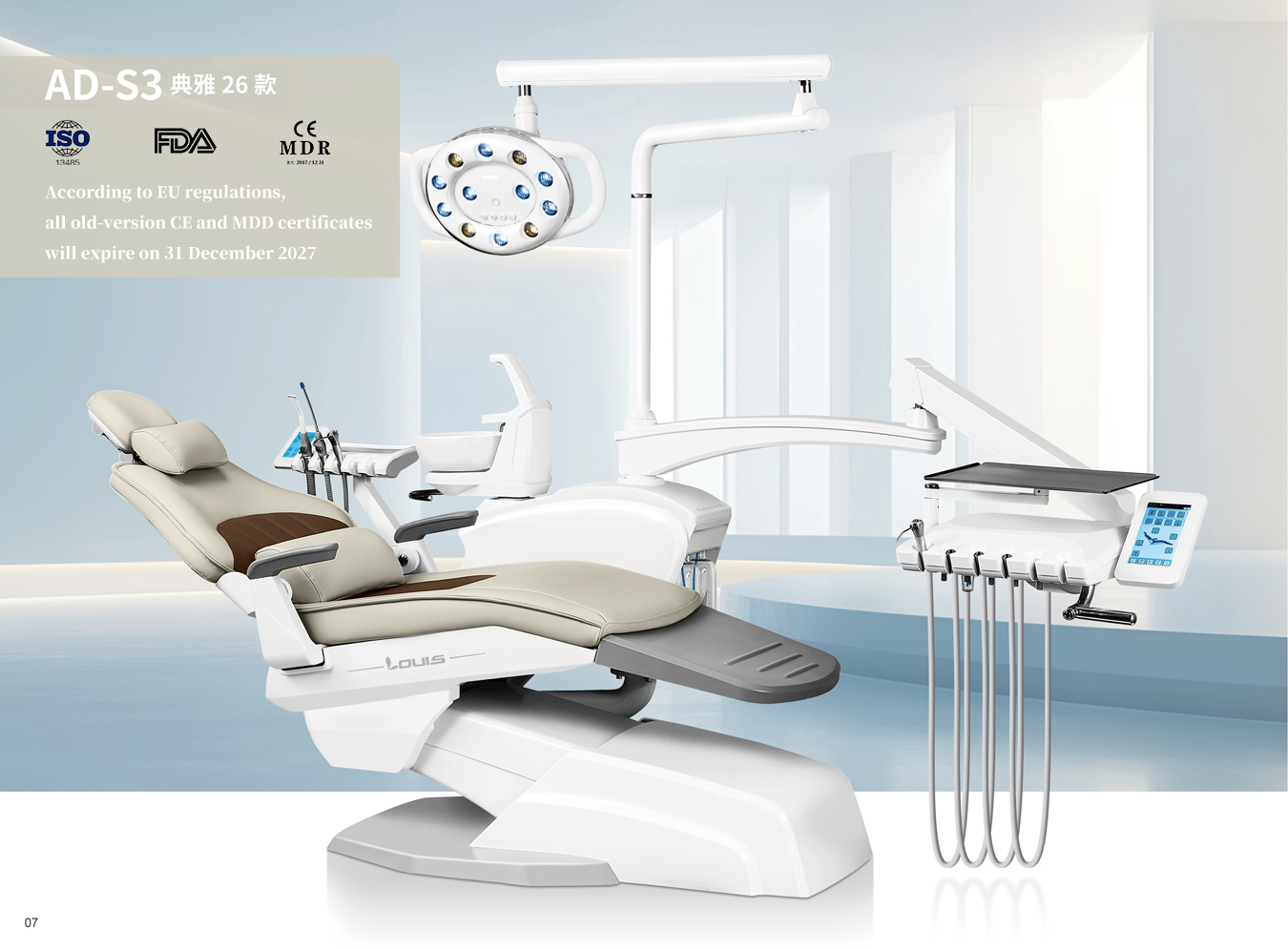
In a dental treatment environment, the dental chair unit not only provides basic support for the patient but also directly affects the dentist's posture and treatment efficiency. The backrest adjustment angle is a crucial parameter in the structural design of the dental chair unit.
Many people ask this question when learning about dental chair unit configurations: What is the range of backrest adjustment angles?
On the surface, this seems like a simple numerical question about angles, but in reality, the backrest adjustment range involves multiple aspects such as ergonomics, mechanical structure design, patient positioning requirements, and system stability.
This article will systematically analyze the range of backrest adjustment angles for dental chair units, starting from structural principles and industry standards, and the design logic behind this parameter.
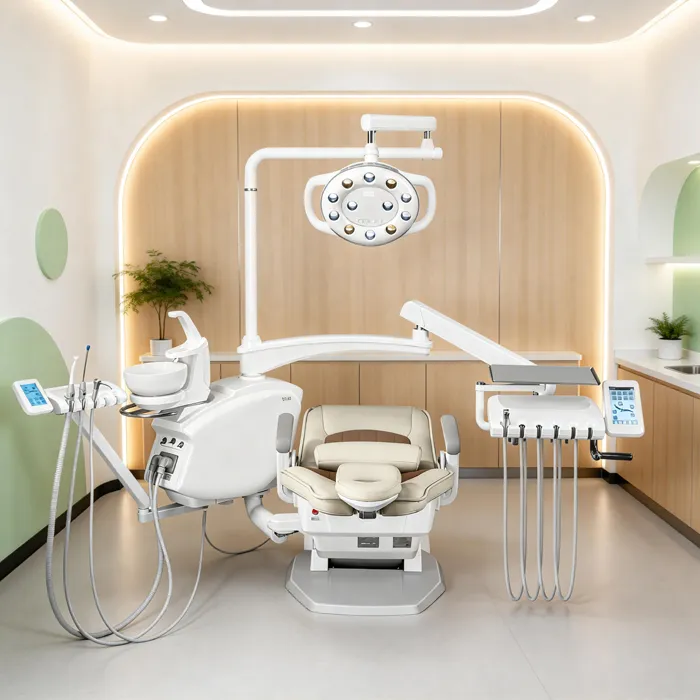
What is the typical backrest adjustment angle for a dental chair unit?
In common industry designs, the backrest adjustment angle range for dental chair units is typically around 0° to 70° (relative to the horizontal position).
To put it another way:
• In an upright position, the dental chair unit backrest is approximately 80°–90° (close to a sitting posture).
• In a fully reclined position, the backrest can be lowered to a near-horizontal position.
• Some dental chair units can also achieve a slight backward tilt, creating a slightly negative angle design.
It should be noted that different brands and models of dental chair units may have slight differences in specific angle values, but the overall adjustment range is roughly similar.
Therefore, the backrest adjustment range of a dental chair unit is not a single fixed value, but a design range.
Why does a dental chair unit need such a large backrest adjustment range?
The backrest adjustment of a dental chair unit is not for "comfortable reclining," but to meet the needs of different treatment positions.
Common positions during dental treatment include:
• Semi-sitting examination position
• Supine treatment position
• Near-horizontal treatment position
• Surgical assistance position at specific angles
If the backrest adjustment range of the dental chair unit is too small, it cannot meet these different treatment needs. Therefore, a wider adjustment range is designed to allow the dental chair unit to adapt to various treatment scenarios.
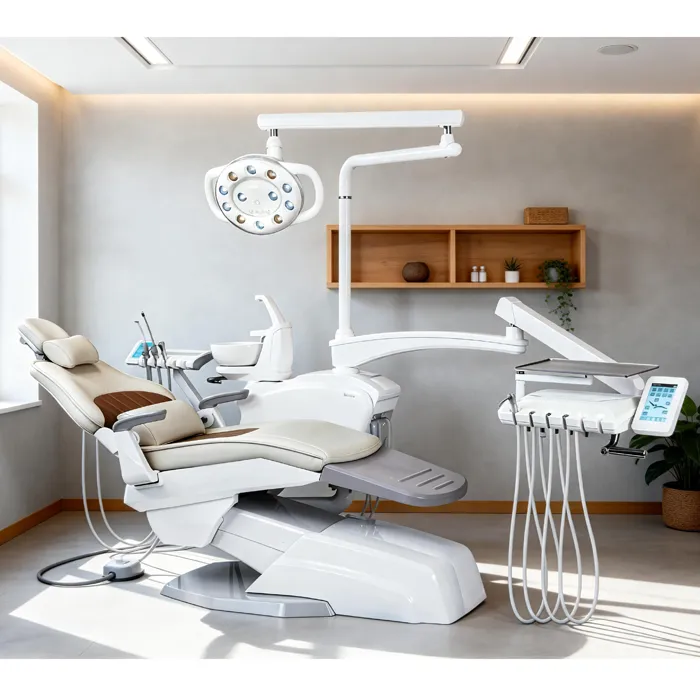
How is the backrest angle of a dental chair unit calculated?
Many people have misconceptions about the "backrest angle of a dental chair unit."
In reality, the backrest angle of a dental chair unit is usually measured with the seat surface as a reference, by measuring the angle between the backrest and the seat surface, or by measuring the backrest tilt angle with a horizontal line as a reference.
Different manufacturers may use slightly different calculation methods when labeling dental chair unit parameters. Therefore, when comparing the backrest adjustment range of dental chair units, it is necessary to confirm the reference standard for their angle labeling.
Can the backrest of a dental chair unit be fully reclined?
In most standard designs, the backrest of a dental chair unit can be nearly horizontal, but not all models can be fully reclined "180°."
The reasons are as follows:
• A completely horizontal design may affect structural stability.
• Some dental chair units need to maintain a slight tilt angle.
• The mechanical structure limits the maximum range of motion.
Therefore, the lowest backrest angle of commonly used dental chair units in the industry is usually 0° or slightly below the horizontal line, rather than extending in a completely straight line.
Does the backrest adjustment angle affect the stability of the dental chair unit?
This is a very critical question.
When designing the backrest adjustment range, dental chair units must consider:
• Changes in center of gravity
• Load-bearing capacity
• Structural stress distribution
When the dental chair unit backrest is tilted back, the patient's center of gravity shifts accordingly. Insufficient structural design may affect overall stability. Therefore, a larger backrest adjustment angle is not necessarily better; a balance must be struck between safety and functionality.
Are the backrest angles the same for different types of dental chair units?
In the market, dental chair units are generally divided into hydraulic and electric types based on their drive method.
The backrest adjustment structure of dental chair units differs depending on the drive method:
• Hydraulic dental chair units rely on a hydraulic system to control the angle.
• Electric dental chair units rely on a motor and transmission mechanism for control.
Although the drive methods differ, the backrest adjustment range of most dental chair units does not vary significantly within industry standards. The core difference usually lies in the adjustment precision and control method, rather than the angle limit.
Is dental chair unit backrest adjustment related to ergonomics?
The backrest angle design of a dental chair unit is closely related to ergonomics.
The design needs to consider:
• Patient's neck support position
• Natural curvature of the spine
• Doctor's line of sight during operation
• Exposure angle of the treatment area
If the backrest adjustment angle of the dental chair unit is insufficient, the doctor may need to frequently adjust their posture, affecting operational efficiency. Therefore, a reasonable backrest adjustment range is an important aspect of the ergonomic design of the dental chair unit.
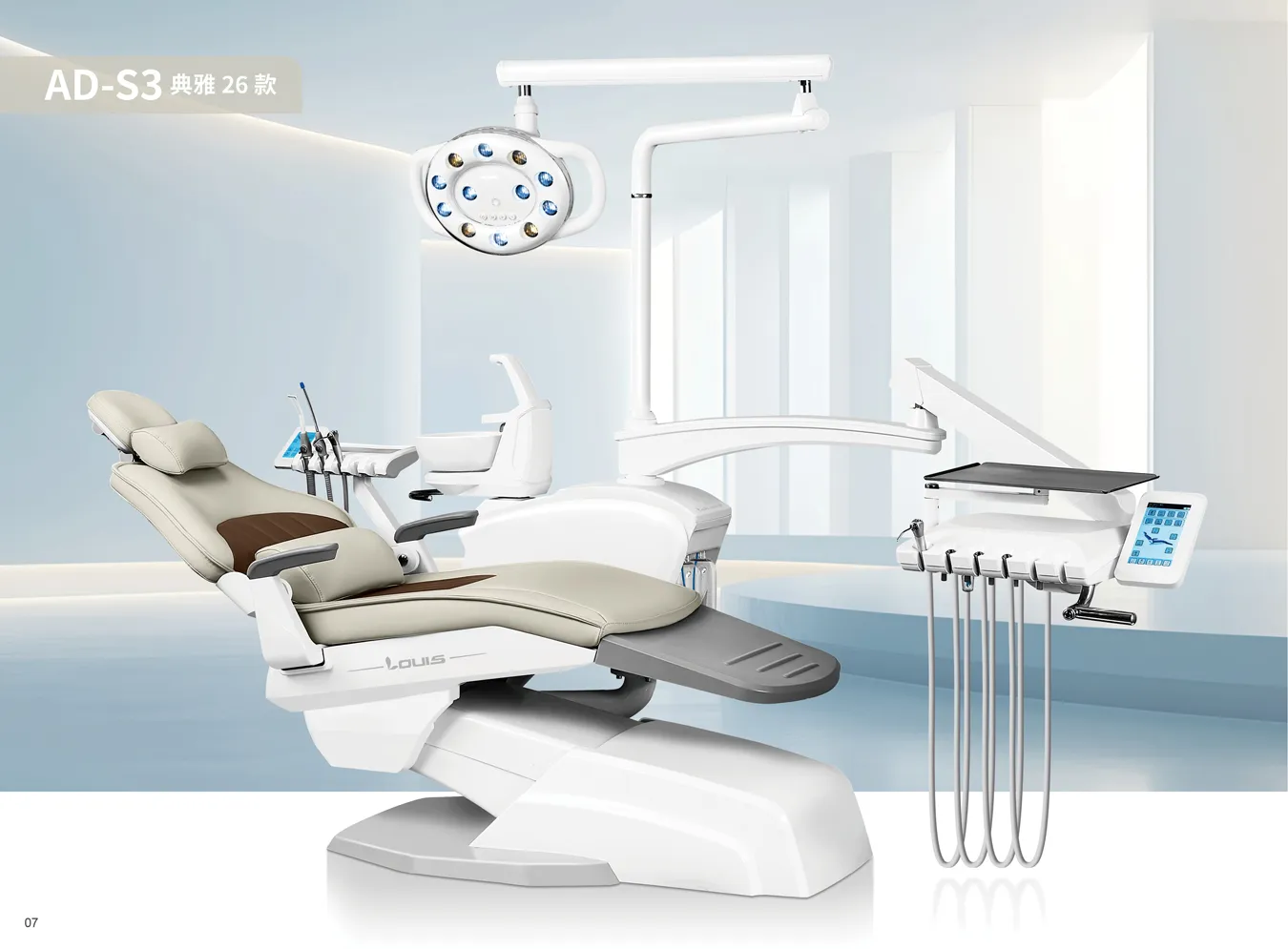
Is a larger backrest adjustment range of a dental chair unit always better?
Many people believe that a larger backrest adjustment range of a dental chair unit indicates better performance. However, this understanding is not comprehensive.
An excessively large angle range may lead to:
• Increased structural complexity
• Concentrated stress
• Decreased adjustment stability
Therefore, the backrest adjustment range of a dental chair unit is usually designed within a reasonable range, rather than being infinitely expanded. The key is whether the adjustment is smooth and the positioning is accurate, not simply the numerical value of the angle.
Does the backrest adjustment angle affect the overall height of the dental chair unit?
During backrest adjustment, the overall structural posture of the dental chair unit often changes. In some designs, backrest adjustment is linked to chair height adjustment to maintain the patient's oral cavity at a suitable height.
Therefore, dental chair unit backrest adjustment involves not only angle changes but also overall structural coordination. This is why dental chair unit adjustment systems need to be highly integrated.
Why do the angle values labeled on different dental chair units appear different?
In product documentation, the backrest adjustment angle of a dental chair unit is sometimes labeled as "80°–180°" and sometimes as "0°–70°".
These differences primarily stem from:
• Different angle calculation benchmarks
• Different annotation methods
• Different reference lines
Therefore, when comparing dental chair unit parameters, one should not only look at the numerical values but also understand the measurement standards.
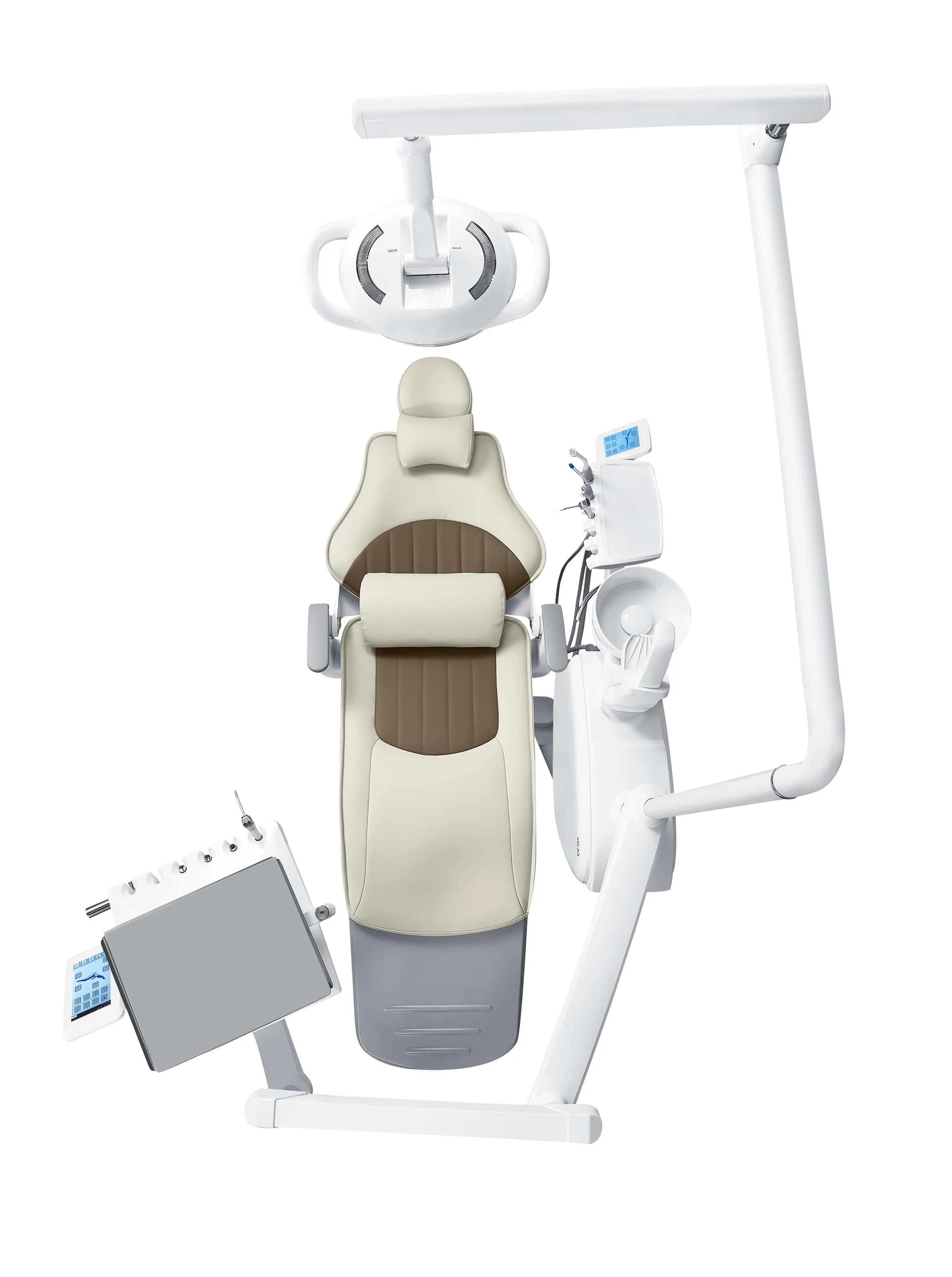
What exactly is the backrest adjustment angle range of a dental chair unit?
According to industry standards, the backrest adjustment angle range of a dental chair unit is typically between a near-upright and near-horizontal posture, approximately 0°–70° (relative to horizontal) or 90°–180° (relative to the seat surface).
This range is not arbitrarily set but is based on:
• Patient positioning requirements
• Structural safety
• Ergonomic design
• System stability
Understanding the true significance of the backrest adjustment angle of a dental chair unit is more important than simply memorizing a numerical value. It reflects the balance achieved between design and function in the dental chair unit.
What is Yadeng’s mission as a dental equipment company?
Our mission is to become a trusted global dental equipment manufacturer and supplier, delivering high quality dental chairs and dental units to every dentist who needs reliable equipment. By combining advanced technology, strict quality control, and competitive prices, our company aims to make dental equipment purchasing easier and more efficient.
