
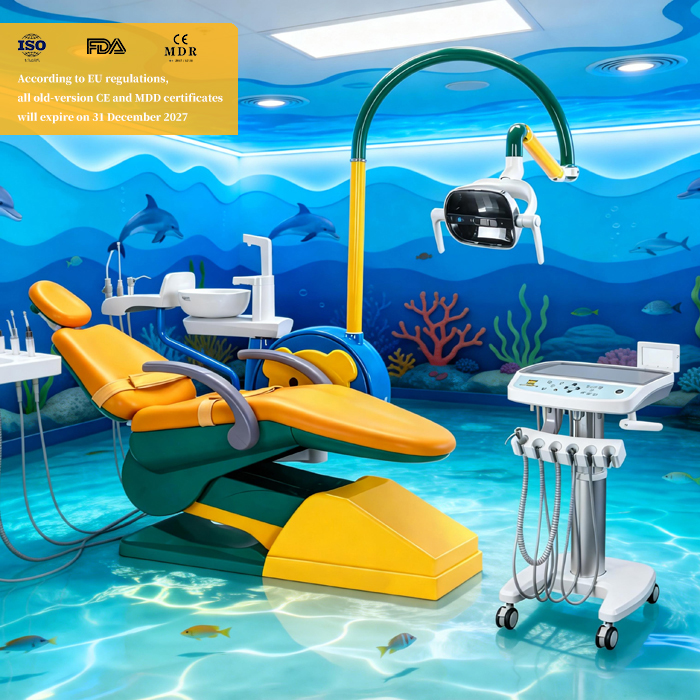
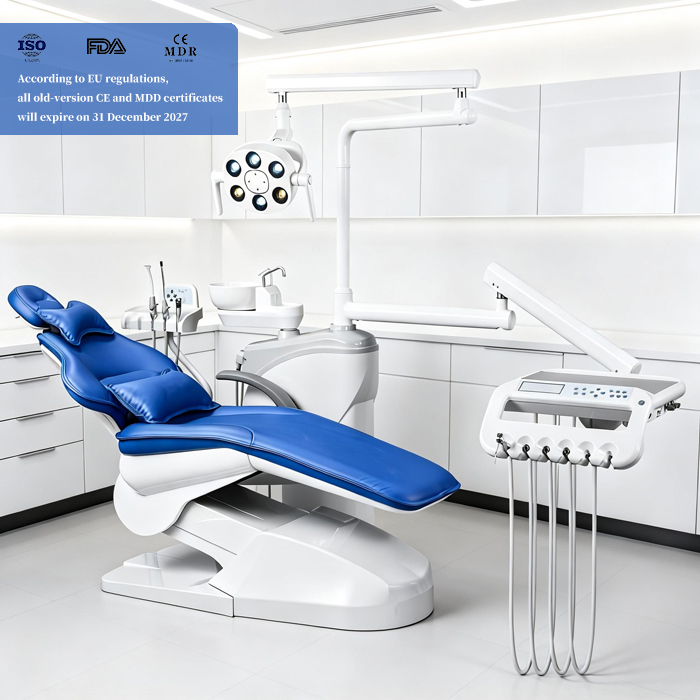
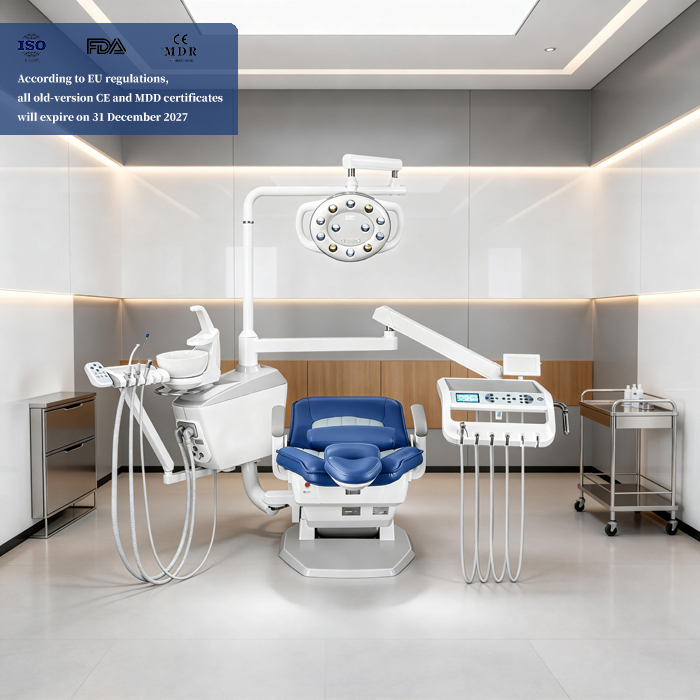
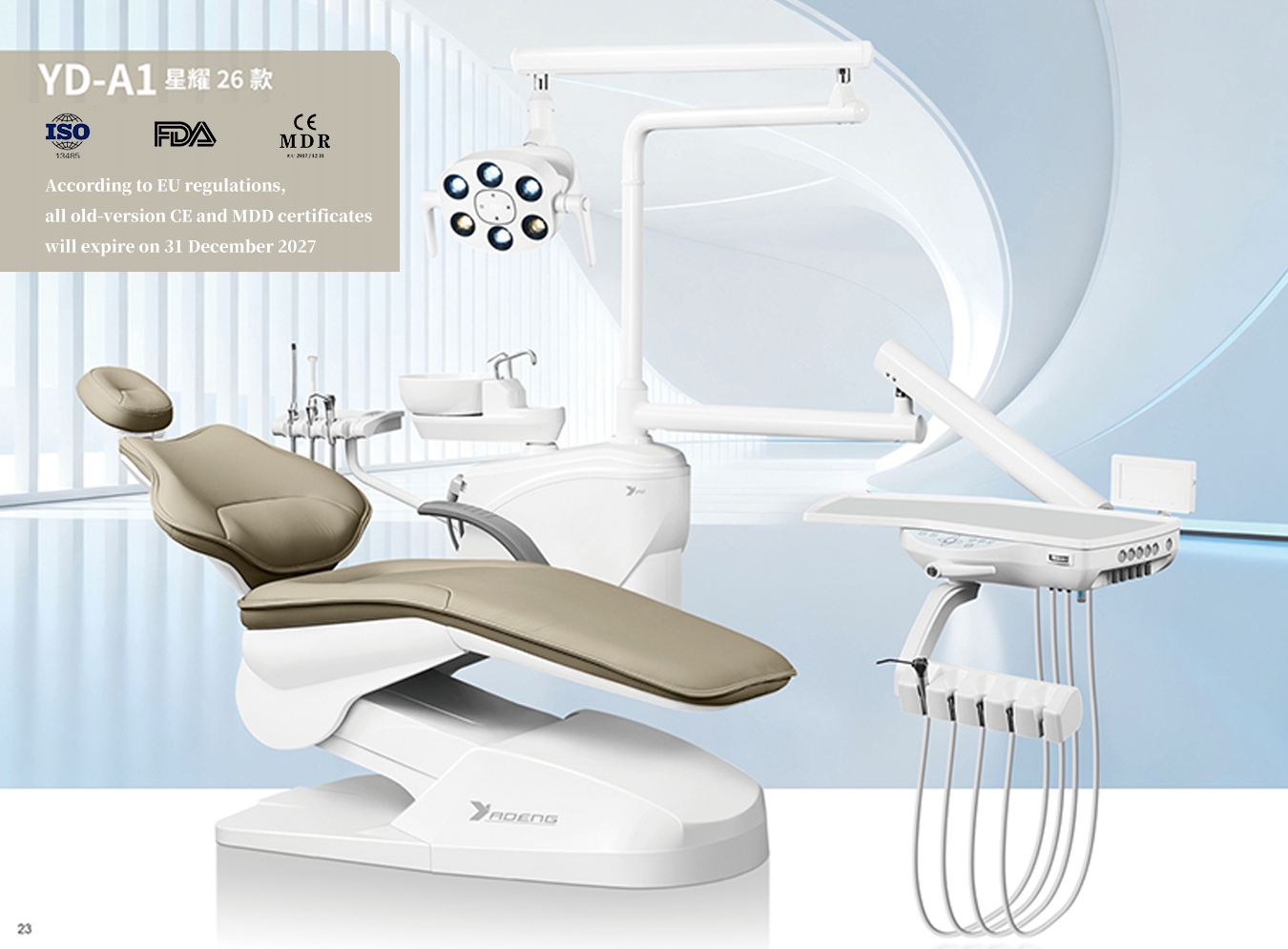
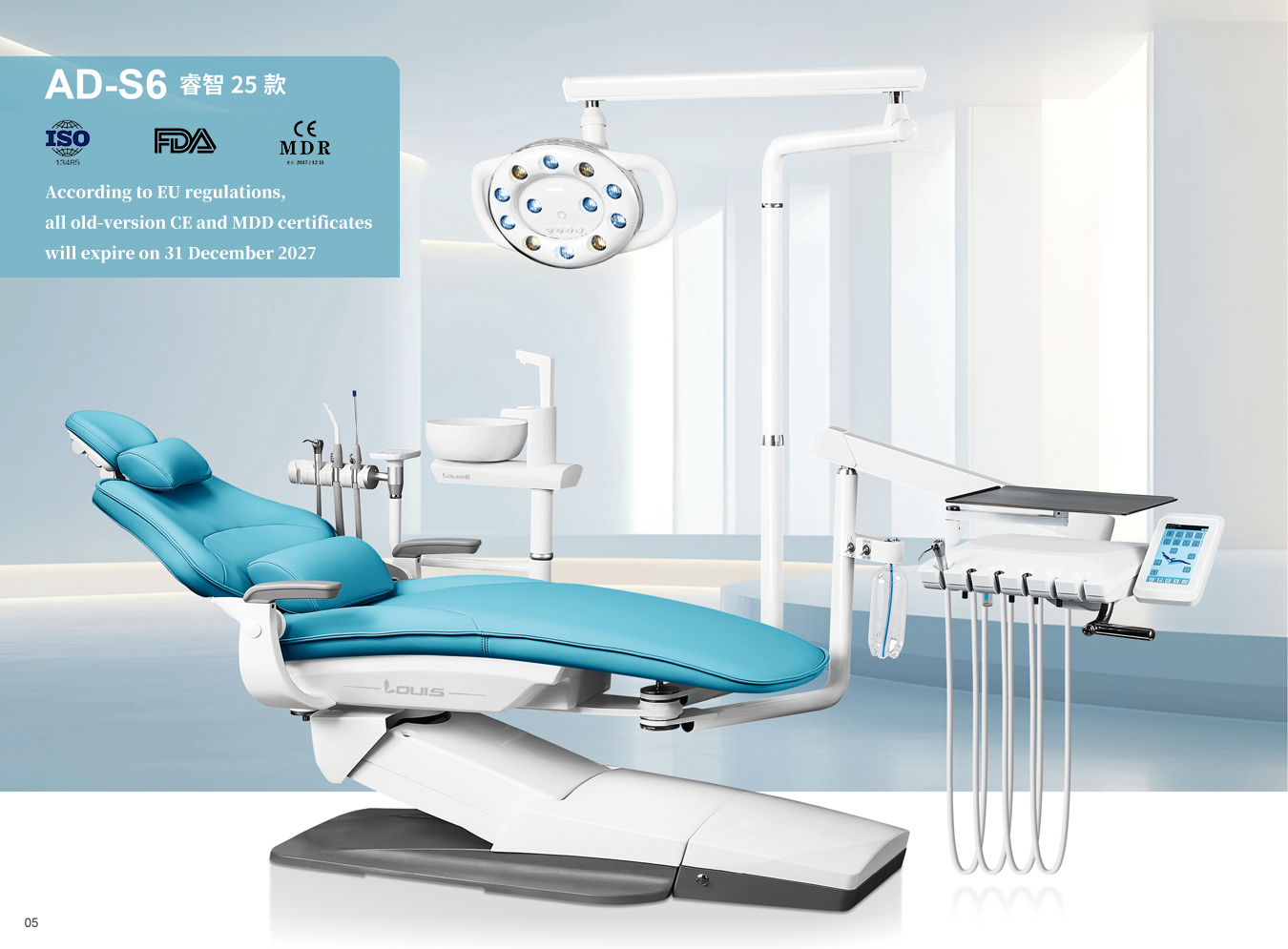
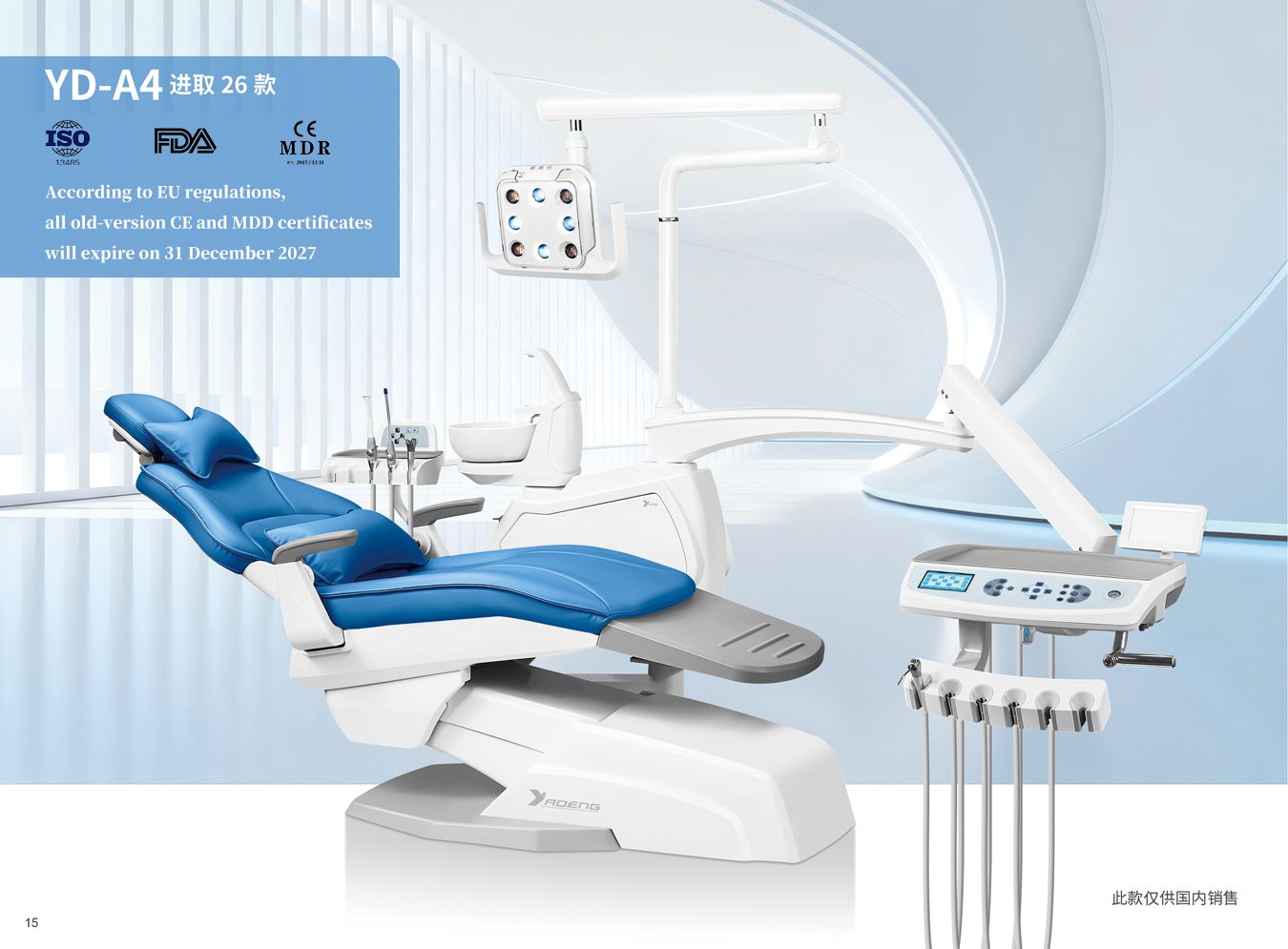
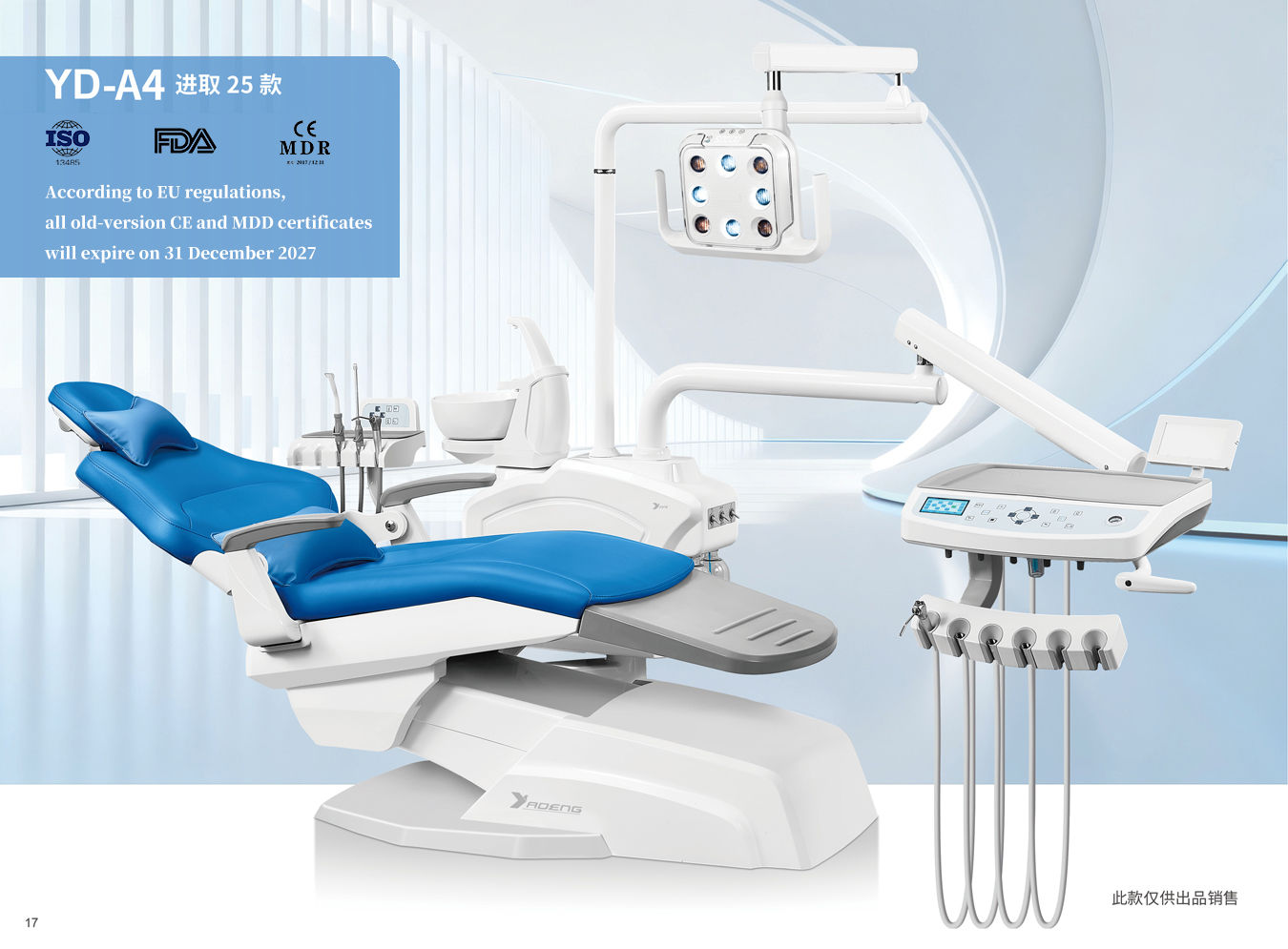
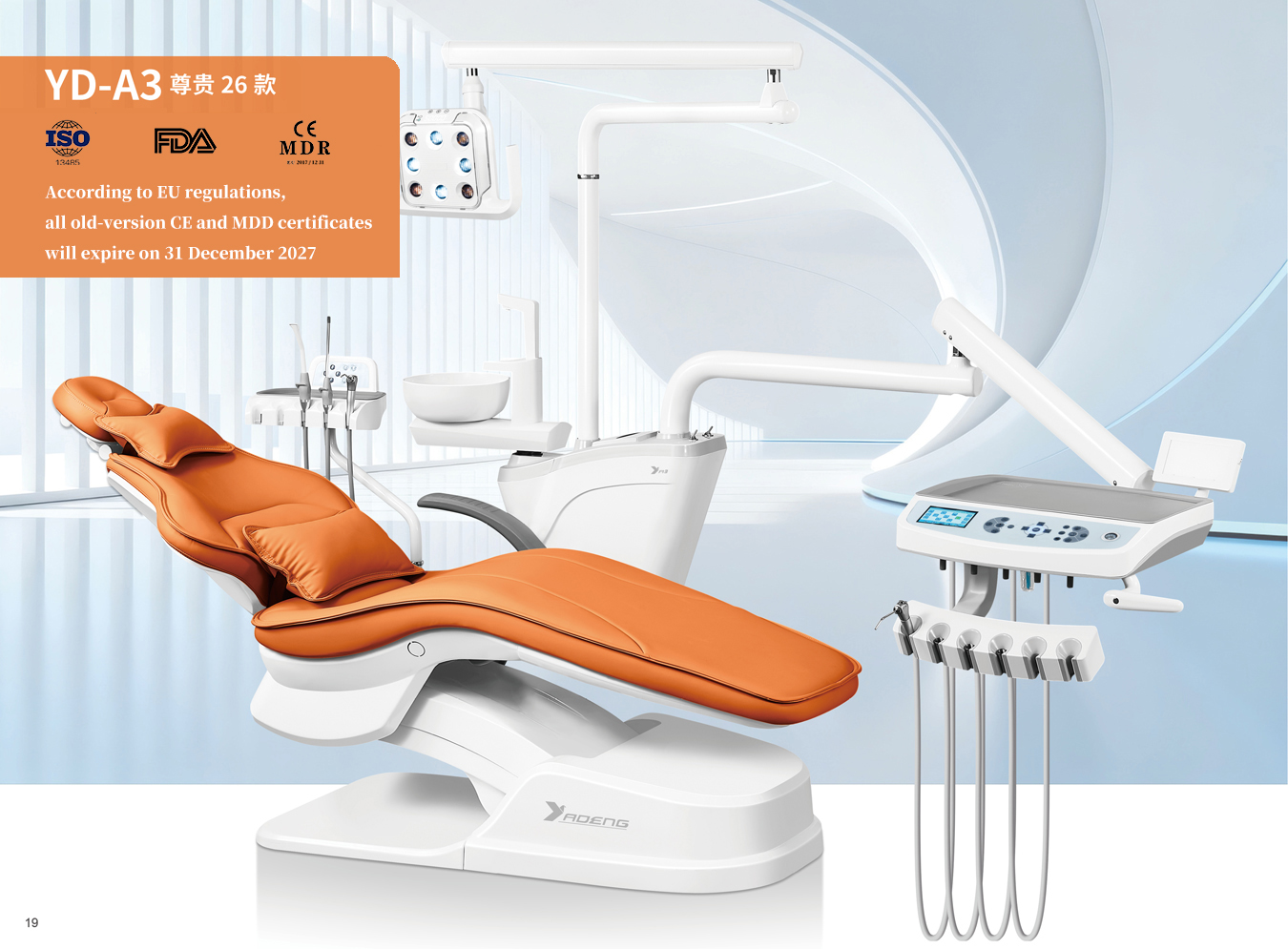
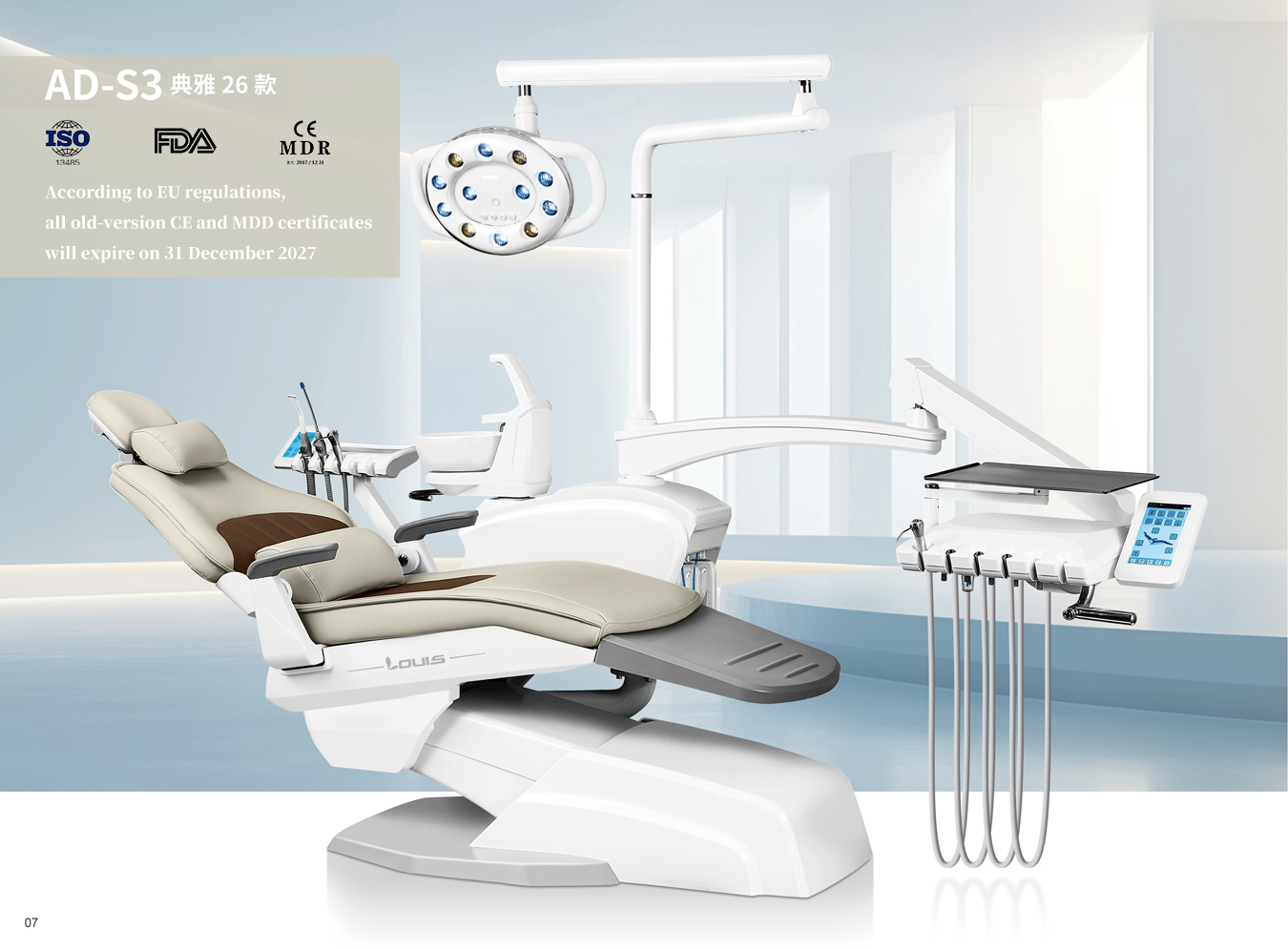
In the dental treatment environment, the dental chair unit is one of the most crucial and frequently used pieces of equipment. Whether for basic examinations, treatment procedures, or auxiliary functional support, the dental chair unit plays a vital role.
Therefore, the dental chair unit not only needs a stable mechanical structure and electrical control system, but also must be kept in a state of excellent cleanliness.
However, in actual equipment management, many people often focus on whether the dental chair unit is functioning properly, neglecting the importance of cleaning and maintenance. This leads to a key question: What problems arise from inadequate cleaning of the dental chair unit?
From the perspective of professional equipment management and operational logic, inadequate cleaning of the dental chair unit not only affects the appearance of the equipment, but may also affect structural stability, operational efficiency, user experience, and overall management level.
This article will systematically analyze this issue from multiple perspectives to help readers fully understand it.
Why must dental chair units maintain a high standard of cleanliness?
Before discussing the consequences of inadequate cleaning of dental chair units, it is essential to clarify a fundamental principle: the dental chair unit is a medical device that involves high-frequency contact and high-frequency operation.
Dental chair units typically possess the following characteristics:
• Frequent surface contact
• Complex structure
• Contains water and air systems
• Multiple components operate in coordination
Because of the complex structure of dental chair units, problems caused by inadequate cleaning often do not appear immediately but accumulate gradually, eventually affecting overall operation.
Will inadequate cleaning of dental chair units affect the stability of equipment operation?
This is a core concern for many managers.
What is the relationship between cleaning and operational stability?
From a structural perspective, many components of a dental chair unit need to maintain smooth and unobstructed operation. If cleaning is inadequate:
• Dust and residue may accumulate at moving joints
• Surface stains may affect button operation
• Deposits may affect the smoothness of use in interface areas
While inadequate cleaning will not immediately cause the dental chair unit to stop working, long-term accumulation will increase operating resistance and reduce system coordination efficiency.
What problems will occur if the water system of a dental chair unit is not cleaned properly?
One of the key features that distinguishes a dental chair unit from a regular medical chair is that it contains an internal water system.
Why are water systems more demanding in terms of cleaning?
Dental chair unit water system:
• Complex piping distribution
• Continuous water flow
• Multiple connection interfaces
If the dental chair unit is not properly cleaned, deposits can easily accumulate on the surfaces of water-related components or connection areas, affecting system stability.
Potential impacts of inadequate water system cleaning
From the perspective of equipment operation logic, inadequate cleaning of the water system may lead to:
• Reduced water flow smoothness
• Increased internal load on the piping
• Deterioration of the overall user experience
Therefore, the water system area of the dental chair unit is a crucial focus in cleaning management.
What are the consequences of inadequate cleaning of the dental chair unit's air system?
Similar to the water system, the air system is also an important component of the dental chair unit.
Structural characteristics of the air system
The dental chair unit's air system typically:
• Relies on stable pressure
• Connects multiple functional modules
• Is in continuous operation
If the dental chair unit is not properly cleaned, dust or microparticles may accumulate around the air interface, affecting sealing and operational efficiency.
Will inadequate cleaning of the dental chair unit affect its overall appearance?
Many people believe that surface cleaning is merely a "visual issue." However, from a professional perspective, the appearance of the dental chair unit is not only about aesthetics but also reflects the level of equipment management.
Why is appearance cleaning important?
As the core equipment in the treatment space, the appearance of the dental chair unit:
• Reflects the level of management standardization
• Reflects equipment maintenance habits
• Affects the overall cleanliness of the environment
An inadequately cleaned dental chair unit will appear poorly maintained, and even if it functions normally, it may reduce the sense of professionalism.
Will inadequate cleaning of the dental chair unit accelerate component aging?
This point is often overlooked, but the logic is very clear.
The relationship between cleaning and aging
Dental chair units are constantly exposed to the external environment. If cleaning is inadequate:
• Stains may corrode surface materials
• Dust accumulation increases mechanical friction
• Increased burden on contact areas
These factors will all accelerate the performance degradation of some components of the dental chair unit.
Why do the moving joint areas of the dental chair unit require more focused cleaning?
In the structure of a dental chair unit, the movable joint areas bear a significant amount of mechanical movement.
If cleaning is inadequate:
• Foreign objects enter the joint gaps
• Increased resistance to movement
• Long-term impact on smoothness
Therefore, movable joint areas are often the part that requires special attention in the cleaning management of dental chair units.
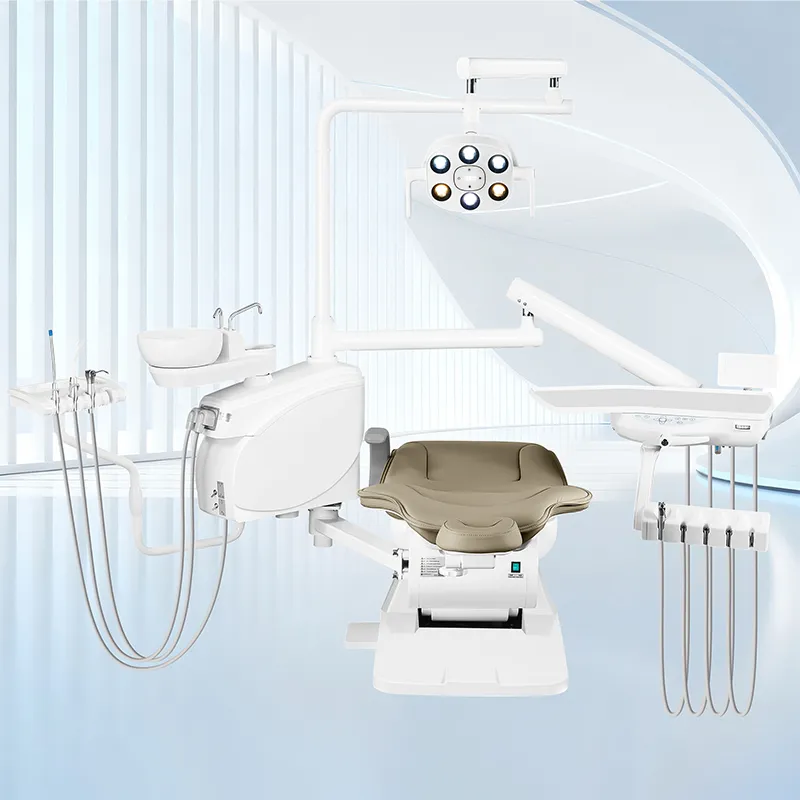
What are the effects of inadequate cleaning of the dental chair unit control panel?
The control panel is one of the most frequently used areas of the dental chair unit.
If cleaning is inadequate:
• Accumulation of residue on button surfaces
• Decreased tactile feedback
• Potential impact on command feedback
From a professional perspective, the control area of the dental chair unit must be kept clean and sensitive; otherwise, the overall user experience will be affected.
Does inadequate cleaning of the dental chair unit increase maintenance costs?
Inadequate cleaning is not simply a surface problem; it can lead to:
• Increased resistance to component movement
• Increased system load
• Increased frequency of later maintenance
Therefore, neglecting the cleaning management of the dental chair unit often results in higher maintenance burdens in the long run.
Why is inadequate cleaning of the dental chair unit considered a "management loophole"?
From a professional equipment management perspective, cleaning dental chair units is not an additional task, but rather an integral part of the equipment maintenance system.
Inadequate cleaning indicates:
• Lack of standardized procedures
• Lack of periodic inspections
• Insufficient management awareness
Therefore, dental chair unit cleaning issues are not only equipment problems, but also management system problems.
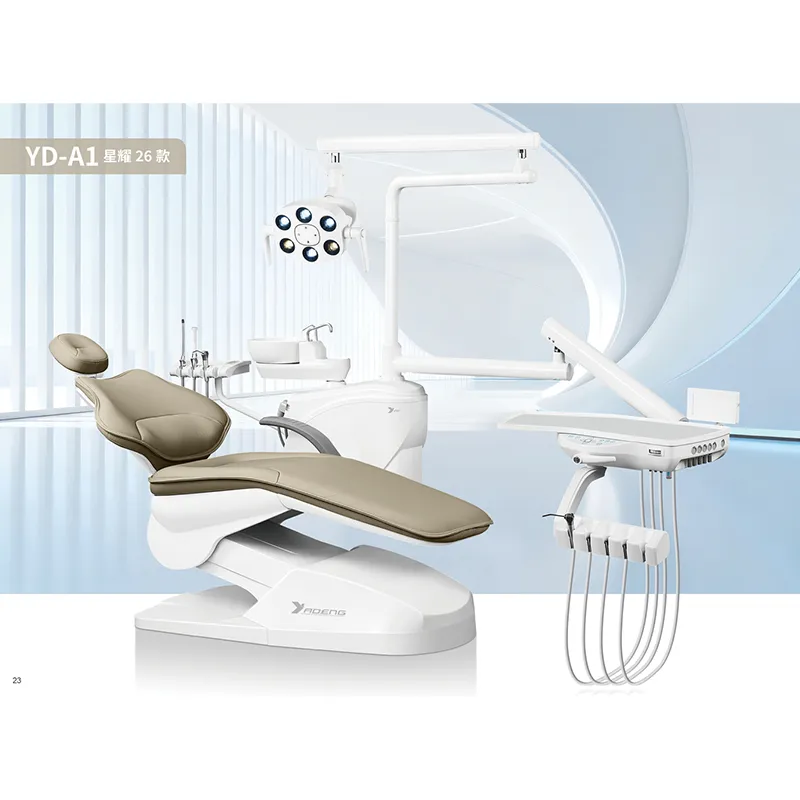
How to understand the importance of dental chair unit cleaning from a professional perspective?
To truly understand the problems caused by inadequate dental chair unit cleaning, a systemic understanding is needed:
1. Dental chair units are high-frequency used equipment.
2. Multiple systems operate in tandem.
3. Complex structure and long-term operation.
4. Cleanliness directly affects operational efficiency.
Only by considering cleaning as part of dental chair unit maintenance can the accumulation of potential problems be avoided.
What role does technology play at Yadeng Medical?
Technology is a driving force behind Yadeng Medical’s growth as a dental equipment manufacturer. Our R&D team integrates modern engineering concepts with practical clinical needs to produce efficient dental chairs and units.
Buyers searching for a high quality dental equipment supplier in China will appreciate our focus on technical improvement, which allows us to offer innovative yet competitively priced solutions for global dental markets.
