
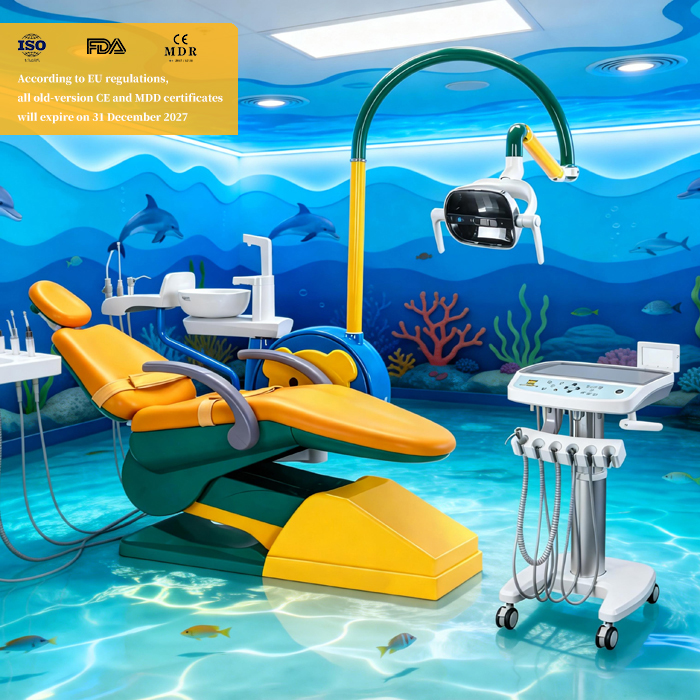
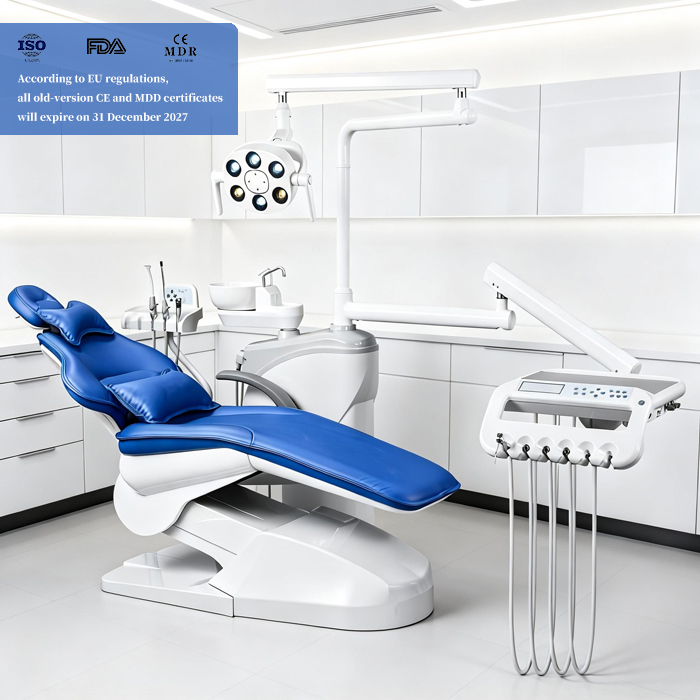
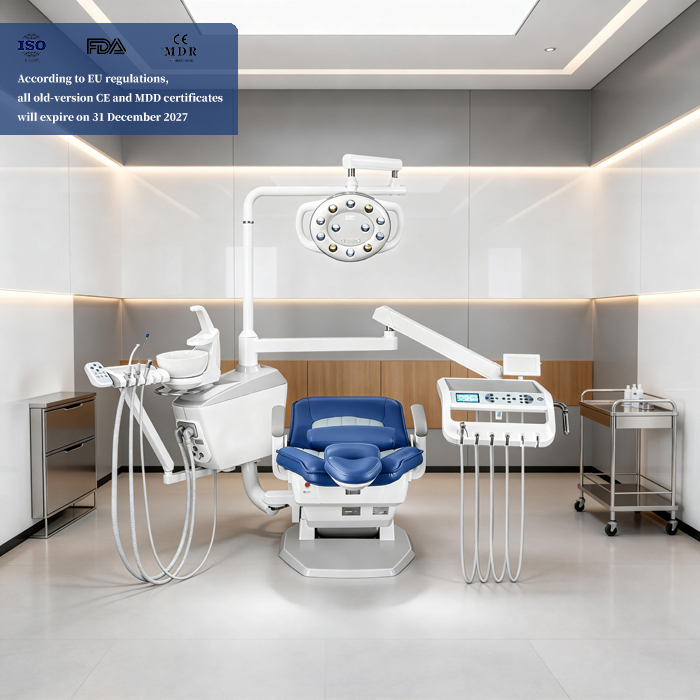
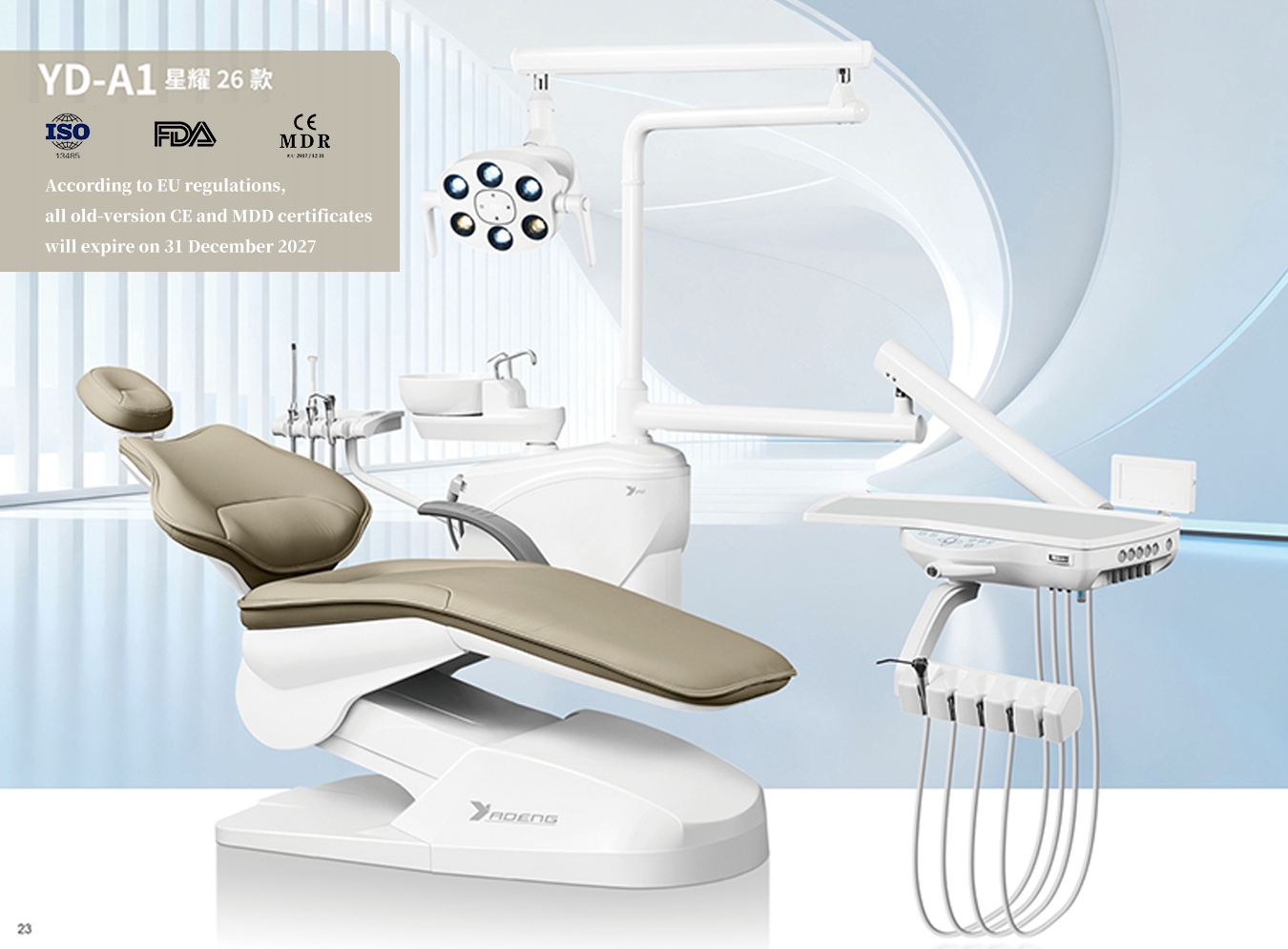
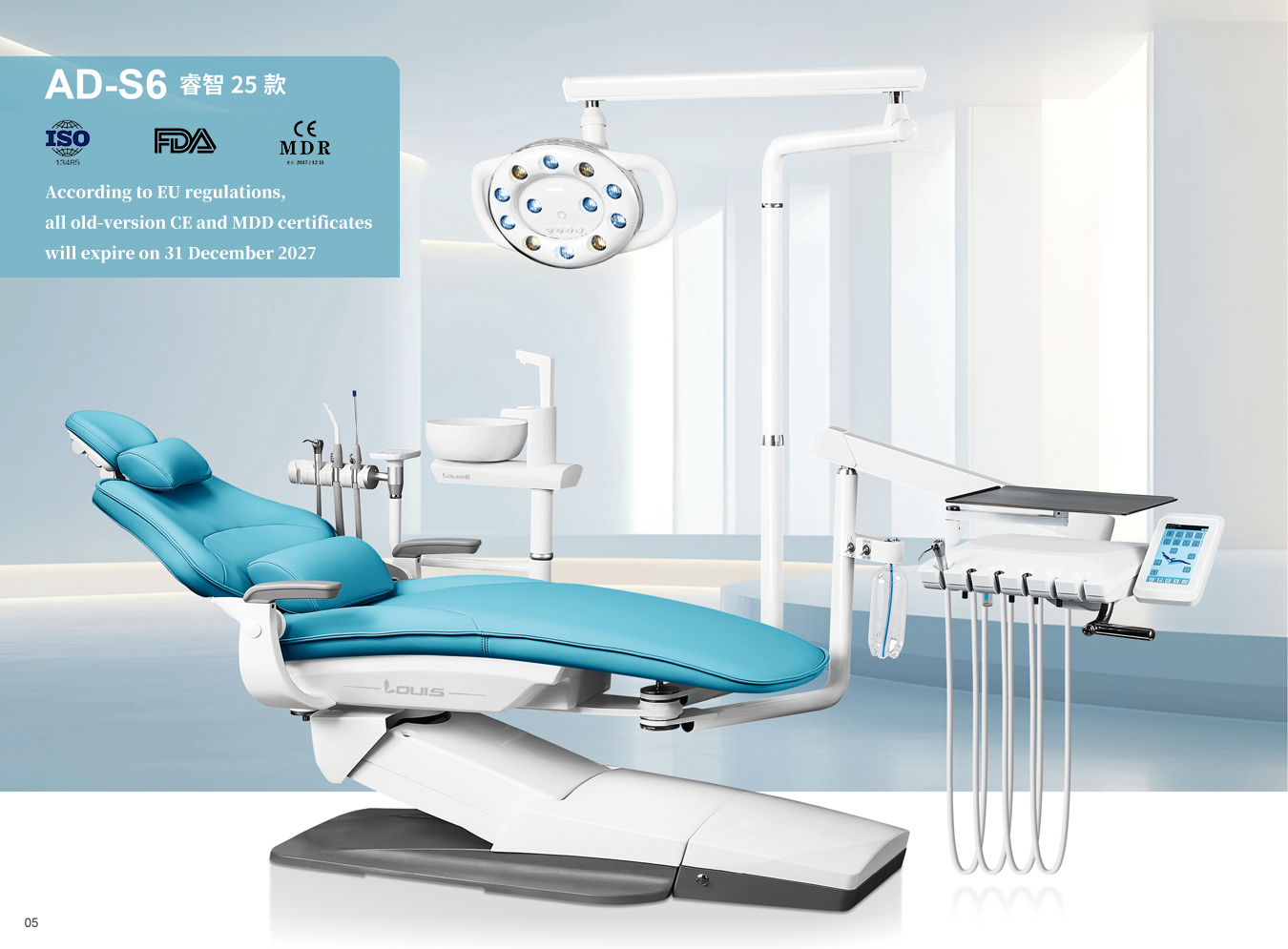
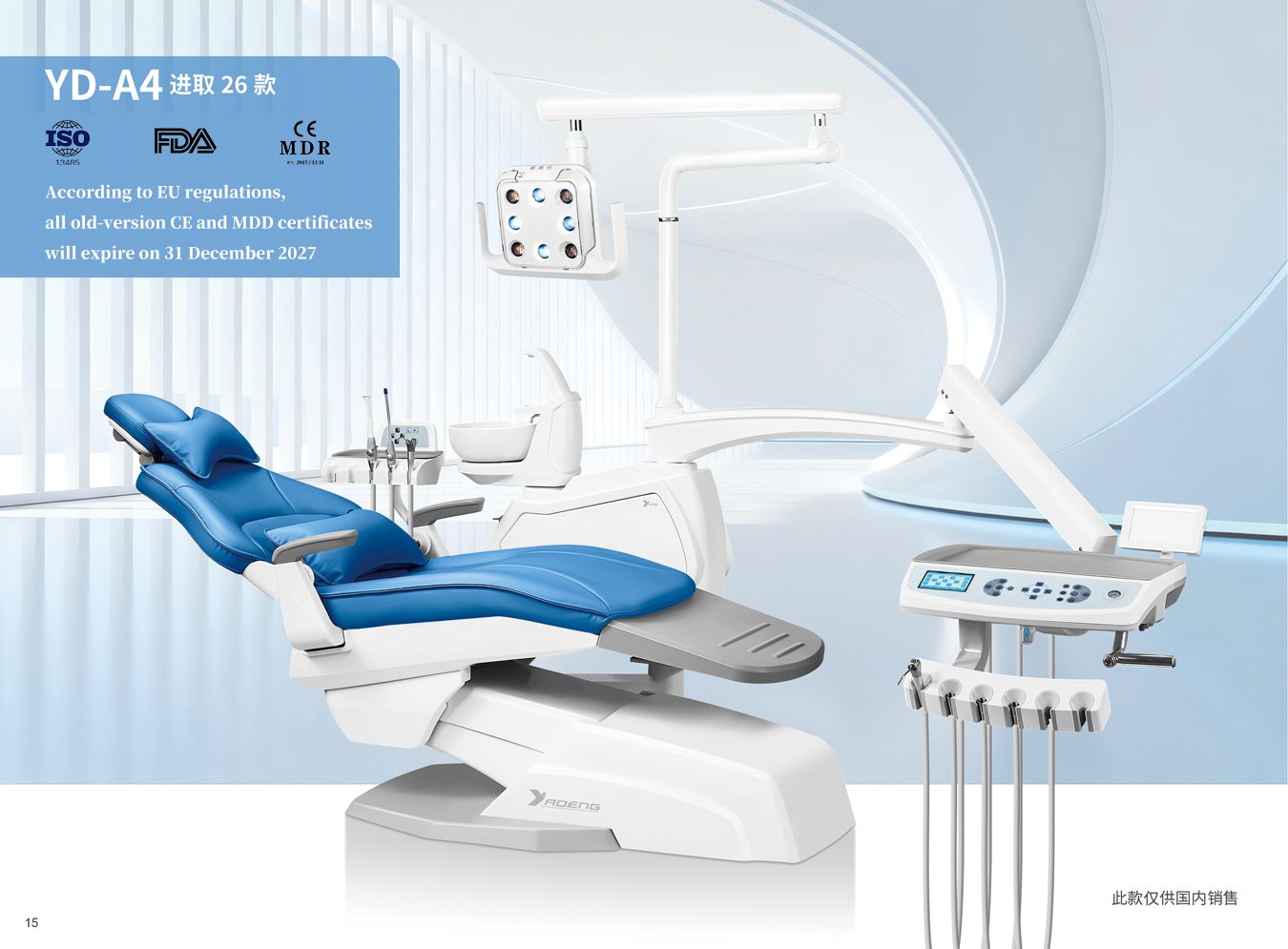
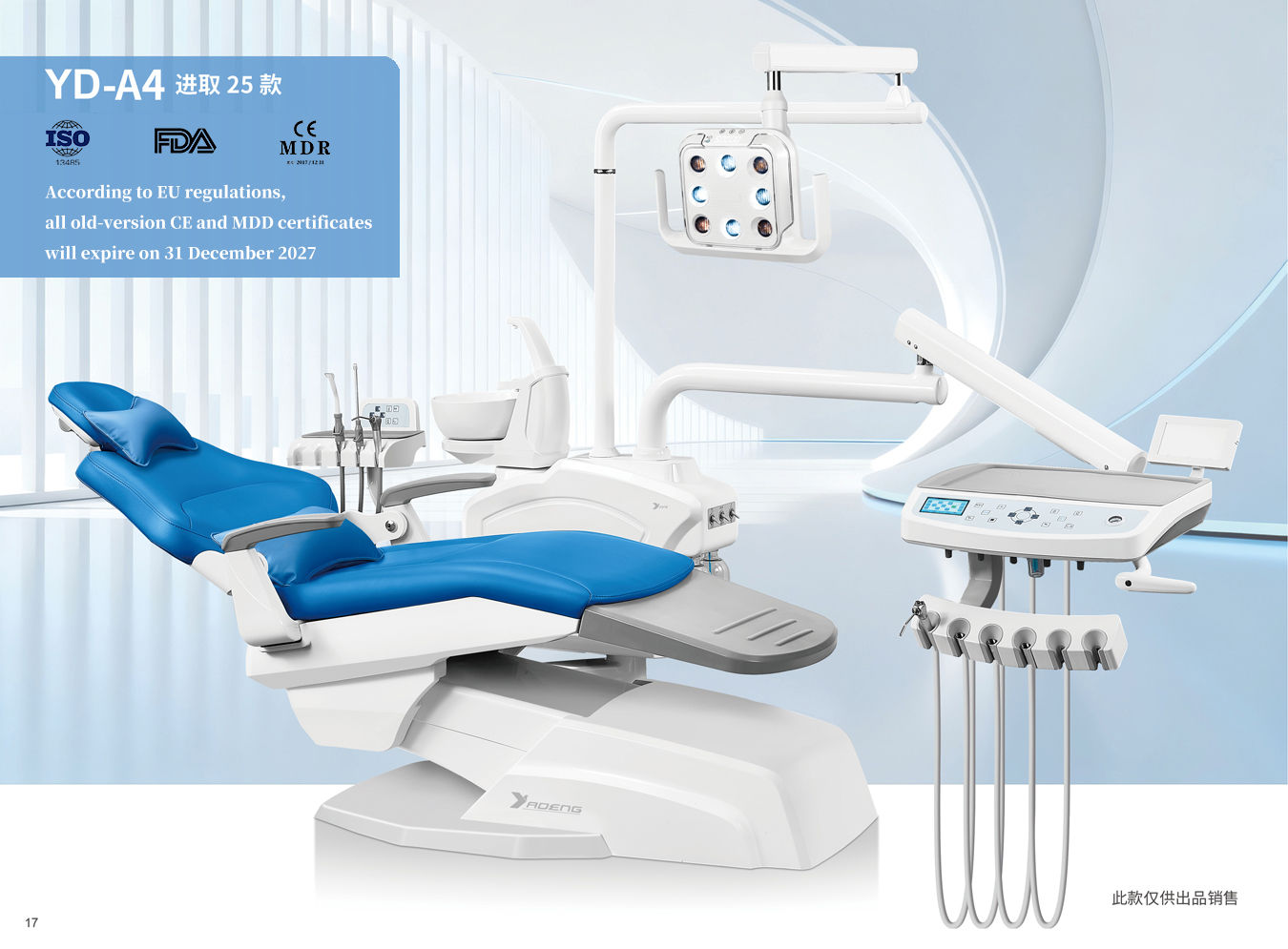
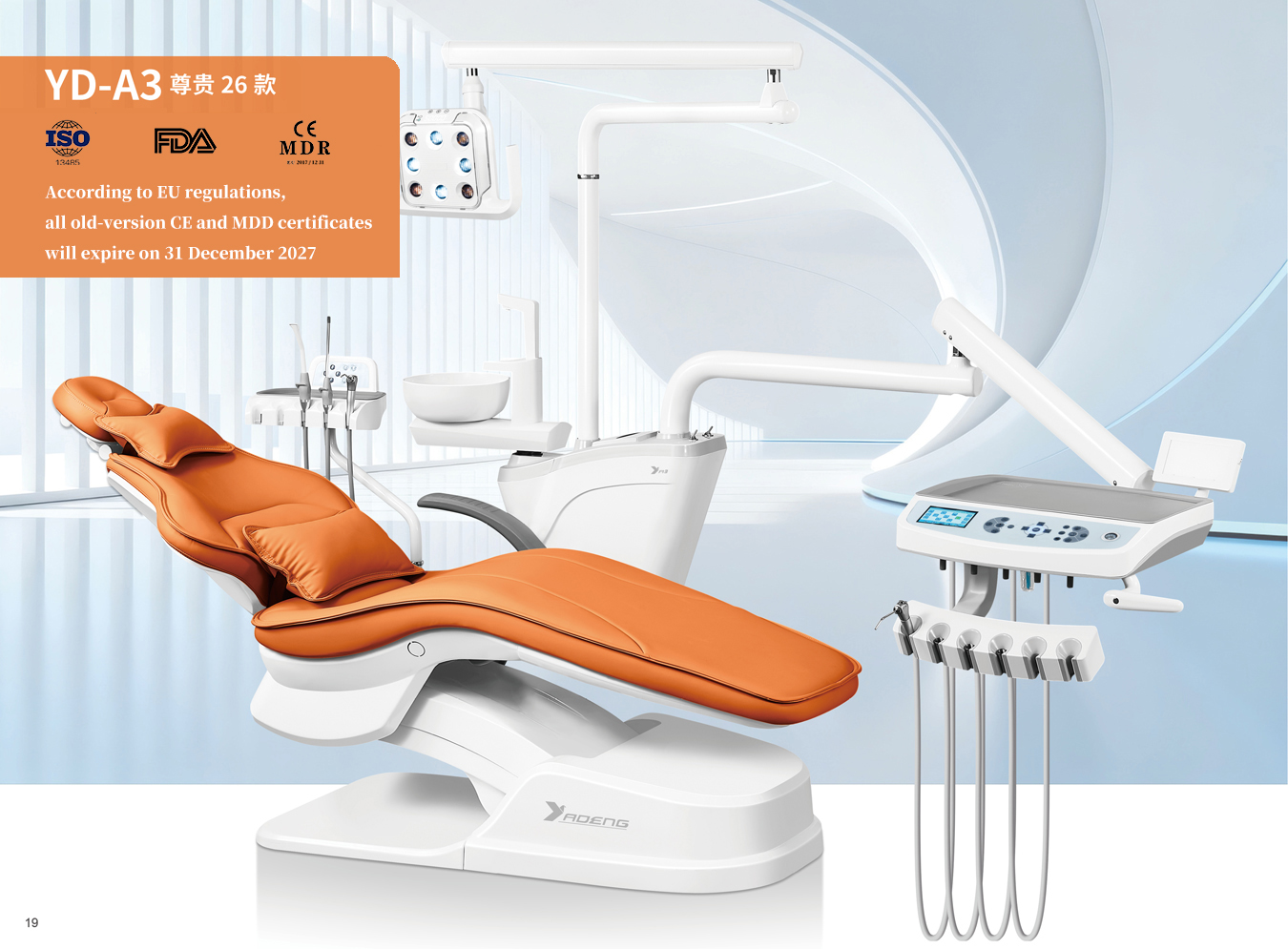
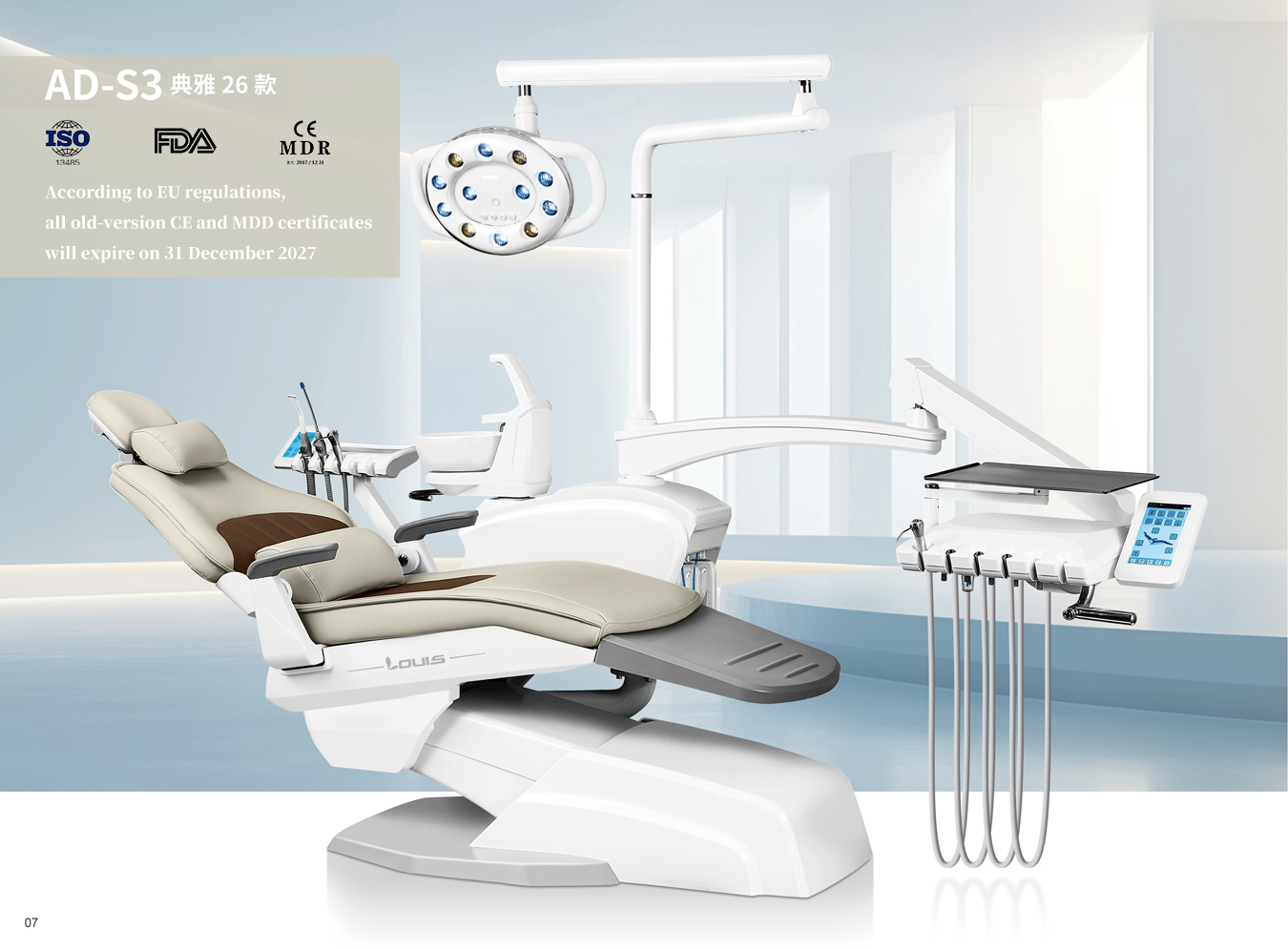
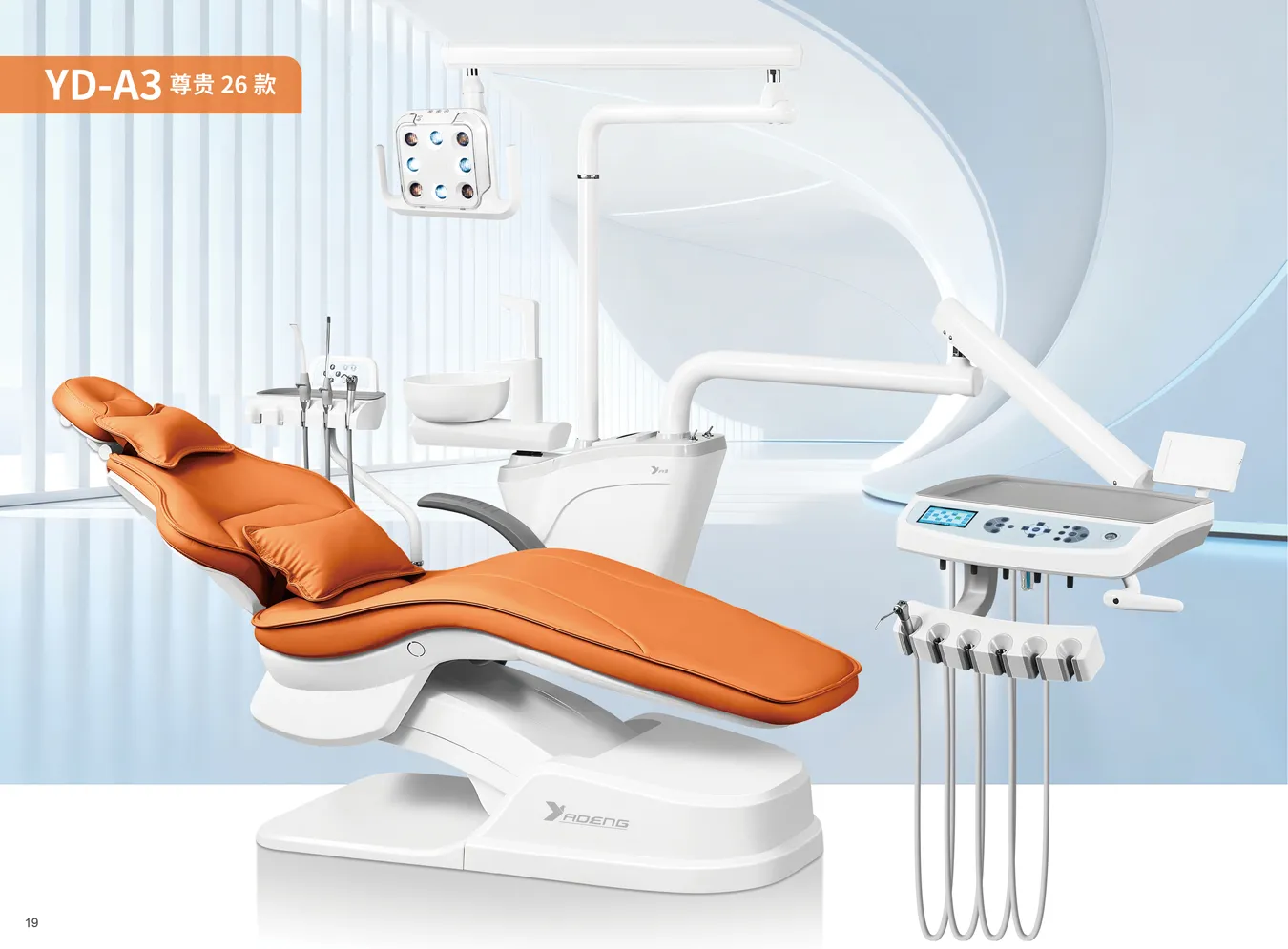
In the dental treatment equipment system, the dental chair unit is a highly integrated core device that operates at high frequency for extended periods. It is not a single structure, but a complex whole composed of mechanical, electrical, hydraulic, and external components. Because of its complex structure and high operational intensity, the loads borne by different components during long-term operation vary significantly.
Therefore, a very practical and professionally valuable question arises: Which components of a dental chair unit are most prone to aging?
From the perspective of equipment management and usage logic, the aging of a dental chair unit does not occur simultaneously as a whole, but rather tends to concentrate on certain high-frequency moving parts, parts made of easily damaged materials, and parts that are exposed for extended periods.
This article will systematically analyze the key components of a dental chair unit that are more prone to aging, helping readers develop a clear and rational understanding of this issue.
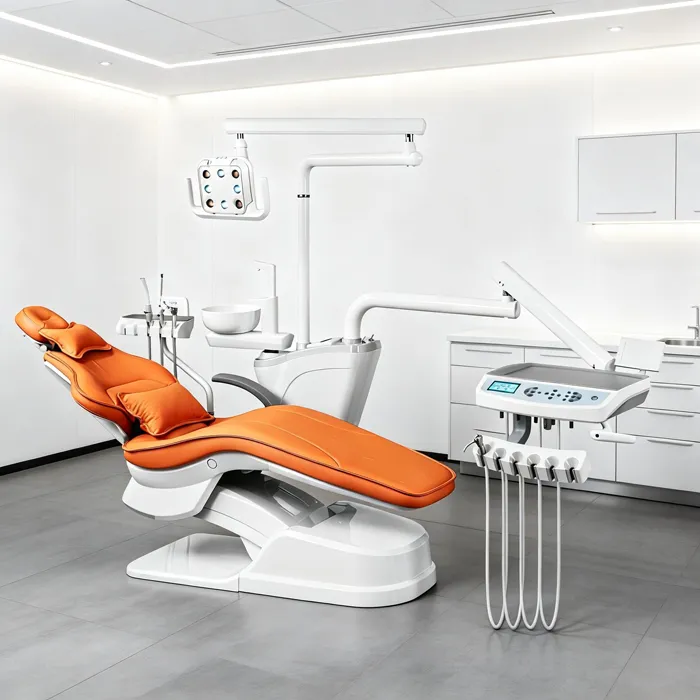
Why is it necessary to focus on the aging of components in a dental chair unit?
Before discussing which components of a dental chair unit are most prone to aging, it is necessary to clarify a basic understanding: aging is not the same as damage, but rather a process of gradual performance decline.
For dental chair units:
• Aging is a natural result of long-term use.
• Aging is often gradual and insidious.
• Component aging directly affects overall operational stability.
Ignoring the presence of easily aging components in a dental chair unit can easily lead to a passive situation in equipment management. Therefore, identifying which components are more prone to aging is an important prerequisite for the scientific management of dental chair units.
Which components in a dental chair unit experience the highest frequency of use?
From a structural perspective, frequency of use is one of the important factors determining the rate of component aging.
In daily operation, the dental chair unit repeatedly performs the following actions:
• Chair height adjustment
• Backrest tilting
• Posture reset
• Instrument start/stop
Components involved in these actions are often in a high-frequency operating state, making them more prone to aging.
Why is the chair height adjustment system of a dental chair unit prone to aging?
Among all functional modules, the chair height adjustment system is almost one of the most frequently used parts of a dental chair unit.
The Role of the Lifting System in a Dental Chair Unit
The chair lifting system is responsible for:
• Adjusting the overall height of the patient
• Facilitating different patient postures
• Achieving continuous and repeated changes in body position
Since almost every patient visit involves lifting operations, this system has a very concentrated workload in the dental chair unit.
The Fundamental Reasons for Lifting System Aging
From a professional perspective, the lifting system is prone to aging primarily due to:
• Bearing heavy loads for extended periods
• Repeated starts and stops
• Continuous mechanical or electrical movement
Therefore, components related to the lifting system are generally considered to be among the most prone to aging in a dental chair unit.
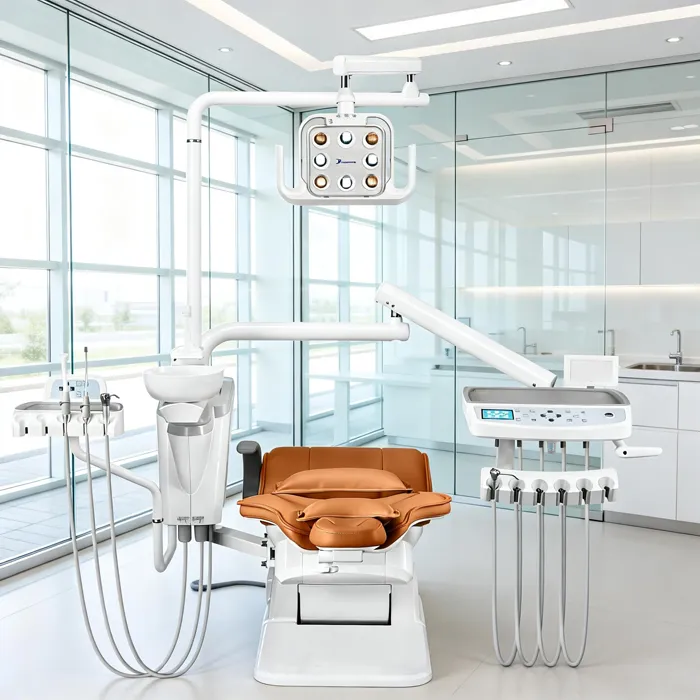
Is the Backrest Adjustment Mechanism of a Dental Chair Unit a Component Prone to Aging?
The answer is yes. The backrest adjustment mechanism is also one of the modules in a dental chair unit with a higher risk of aging.
The Working Characteristics of the Backrest Adjustment Mechanism
During the operation of a dental chair unit, backrest adjustment requires:
• Precise control of angle changes
• Repeated switching between different body positions
• Maintaining long-term structural stability
This high-precision, repetitive movement characteristic makes the backrest adjustment mechanism more prone to performance degradation after long-term use.
Does the Electrical Control System of a Dental Chair Unit Aging?
In modern dental chair units, the electrical control system is an indispensable and important component. Although the electrical control system is not as intuitive as mechanical parts, it is also subject to aging.
The Role of the Electrical Control System in a Dental Chair Unit
The electrical control system is mainly responsible for:
• Receiving commands
• Controlling motion execution
• Coordinating between various systems
Once certain components in the electrical control system age, it may affect the overall responsiveness and stability of the dental chair unit.
Why do electrical control systems also age?
From a theoretical perspective, the aging of the electrical control system is often related to the following factors:
• Continuous operation with power on
• Frequent input of operating commands
• Continuous operation of internal components
Therefore, although the electrical control system is not considered a "visible consumable part," it is indeed an area of aging that cannot be ignored in the dental chair unit.
Is the water system of the dental chair unit prone to aging problems?
The water system is a crucial component that distinguishes the dental chair unit from ordinary medical chairs, and it is also a system that operates continuously.
Characteristics of the water system in the dental chair unit
The water system of a dental chair unit typically has the following characteristics:
• Continuous water supply
• Multiple interface connections
• Complex piping distribution
Because of its complex structure, some components in the water system are more prone to aging after long-term use.
Which water-related components are more prone to aging?
Logically, in the water system:
• Components subjected to pressure for extended periods
• Connections that are frequently opened and closed
are more likely to experience performance changes.
This is one of the reasons why the dental chair unit's water system is considered a "key area of concern."
Does the pneumatic system of a dental chair unit also face the risk of aging?
Similar to the water system, the pneumatic system is a module that continuously operates within the dental chair unit.
The Role of the Pneumatic System in a Dental Chair Unit
The pneumatic system is primarily used for:
• Instrument actuation
• Assistive function support
• Movement coordination
Because the pneumatic system needs to maintain pressure and stable output over a long period, its internal components are also susceptible to natural aging.
Are the External Coverings and Padding of a Dental Chair Unit Prone to Aging?
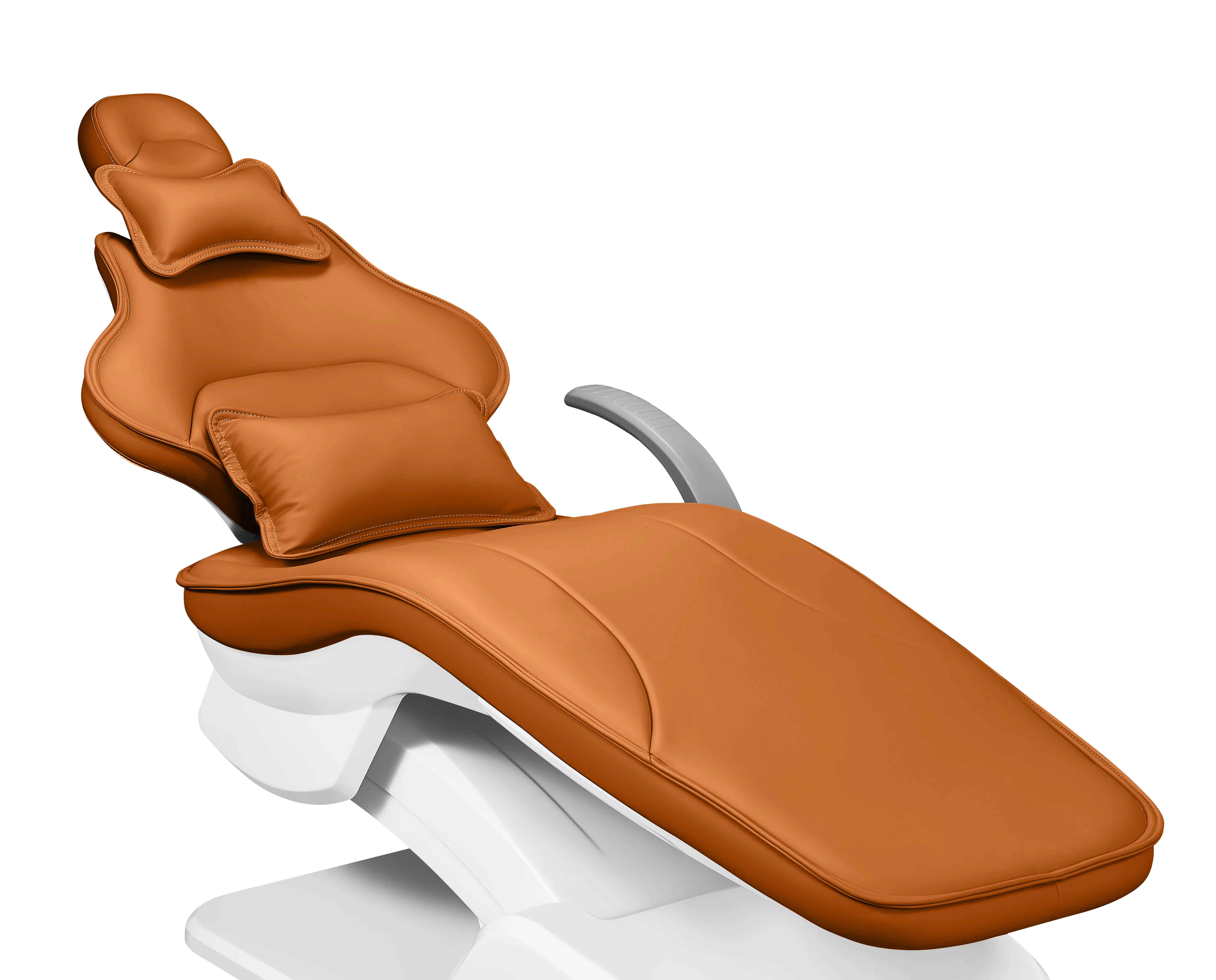
Besides the internal system, the external components of a dental chair unit are also where aging is most readily apparent.
Characteristics of External Components in a Dental Chair Unit
These components typically include:
• Chair cover material
• Armrest surface
• Headrest area
They are constantly exposed to the external environment and directly contact the user, therefore their aging is often more pronounced.
Why does aging often occur first in "high-frequency + vulnerable" components?
A systematic analysis of the dental chair unit's structure reveals a clear pattern:
The components at highest risk of aging typically exhibit two characteristics: high usage frequency and structural fragility.
This is why:
• Height adjustment system
• Backrest adjustment mechanism
• Moisture/air interface components
are often prioritized for monitoring.
Can the aging of dental chair unit components be identified in advance?
While this article doesn't cover specific cases, logically speaking, component aging doesn't occur suddenly but is the result of gradual accumulation.
Through a systematic equipment management approach, we can, to some extent:
• Identify high-risk components
• Monitor changes in operational status
• Rationally schedule maintenance
This is precisely the practical significance of understanding "which components of a dental chair unit are most prone to aging."
From a professional perspective, how can we correctly understand the "aging" of a dental chair unit?
In professional terminology, aging doesn't mean the equipment is "unusable," but rather refers to:
• Decreased performance stability
• Reduced operating efficiency
• Reduced coordination precision
Therefore, understanding the aging components of a dental chair unit is essentially a rational understanding of the equipment's lifecycle.
Which components of a dental chair unit are most prone to aging?
A clear and logical conclusion can be drawn:
• Not all components of a dental chair unit age simultaneously.
• Components with high usage frequency are more prone to aging.
• The height adjustment system and backrest adjustment mechanism are key areas.
• Critical connecting components in the water and air systems are at risk of aging.
• The electrical control system is also not to be overlooked.
• The external covering and cushioning are the most obvious areas showing signs of aging.
Therefore, determining which components of a dental chair unit are most prone to aging is not a vague question, but a professional issue that can be systematically determined through structural analysis and usage logic.
What services does Yadeng provide besides product supply?
Beyond being a dental equipment supplier and manufacturer, our company offers comprehensive service support. We assist customers with product selection, customized configurations, and technical documentation for smooth purchasing. Distributors who buy dental chairs or dental units from our factory receive guidance on installation and after-sales service coordination.
Our goal is to provide not only high quality products but also reliable cooperation, making the purchasing process simple, efficient, and professional for global clients.
